Balcony Lettuce and Herbs Harvest Planning Guide
A reliable lettuce-and-herb balcony plan is built around how each crop is harvested, not around an invented “successful harvest” story. Decide which crops allow repeated cuts, which are normally harvested once, and when local conditions sup
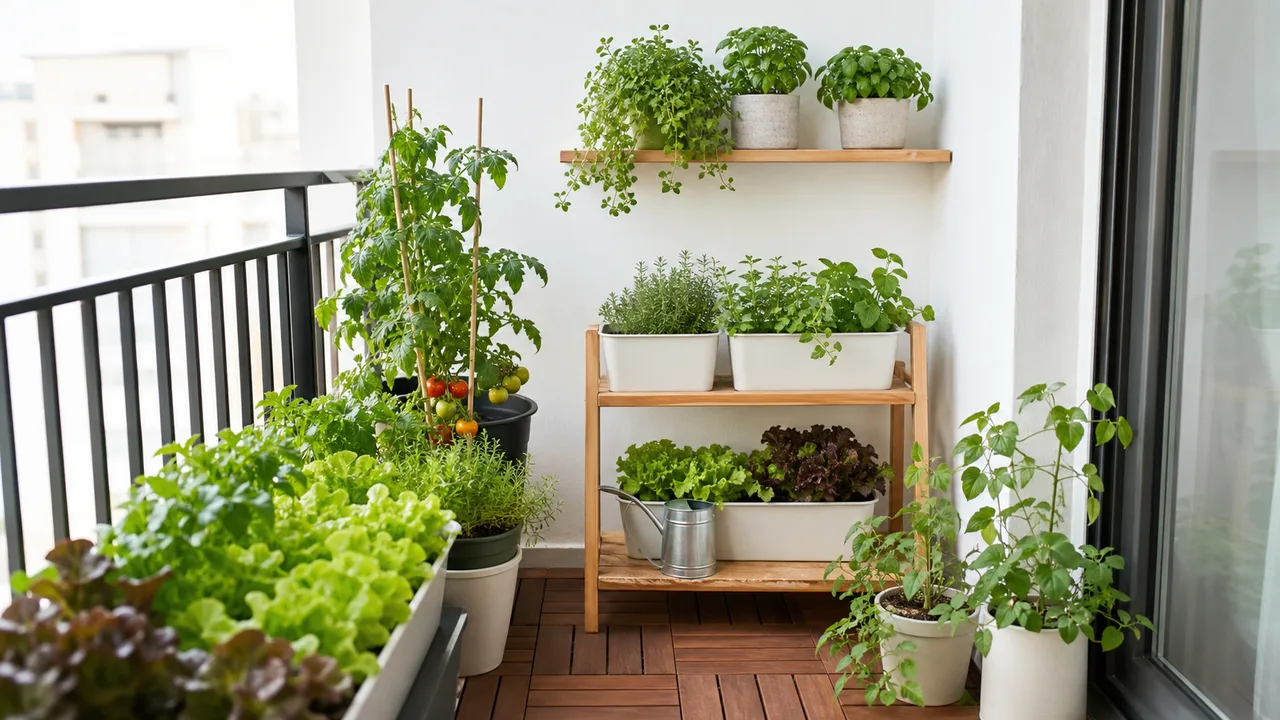
A reliable lettuce-and-herb balcony plan is built around how each crop is harvested, not around an invented “successful harvest” story. Decide which crops allow repeated cuts, which are normally harvested once, and when local conditions support the next sowing. Then keep a simple record of what was actually planted and used.
Assign each crop a harvest role
Repeated leaf or stem harvest
Leaf lettuce and many herbs can supply more than one cutting when the growing point remains healthy. University of Minnesota Extension describes harvesting the most mature lower leaves or stems while allowing suitable leaf lettuce and herbs to continue growing. This is a harvest method, not a guarantee of a set number of meals.
One main harvest
Head lettuce is generally harvested once. Do not plan it as if it will regrow like leaf lettuce. Reserve a replacement sowing or a different crop for that container after harvest, subject to local timing.
Short seasonal crop
Cilantro and lettuce may be poor choices during unsuitable heat. UMN notes that summer heat can cause lettuce to bolt and taste bitter. Choose seasonally suitable varieties and use a local planting calendar rather than forcing a fixed year-round schedule.
Build a three-container plan
Use separate containers when crops have meaningfully different moisture, light, or replacement needs.
- Leaf lettuce container: select a leaf type and follow packet spacing and harvest instructions.
- Frequently used herb: choose one herb the household actually uses and follow its crop-specific care.
- Replacement slot: hold space for a later lettuce sowing, cilantro in a suitable period, or another locally appropriate herb.
Do not group herbs merely because they appear in the same recipe. University of Maryland Extension notes that basil, mint, parsley, and cilantro prefer more consistent root moisture than rosemary, thyme, oregano, and lavender. Separate incompatible moisture needs.
Mint also deserves its own boundary because it spreads aggressively by runners (stolons). A dedicated container makes its spread easier to manage.
Schedule from local conditions
Succession planting means starting a new crop as an earlier crop approaches the end of its useful period. It does not require one universal interval. UMN recommends repeated sowings of leafy vegetables over suitable spring and summer periods, while also warning that heat affects lettuce quality.
For each sowing, record:
- crop and cultivar;
- sowing or transplant date;
- packet maturity information;
- local weather or seasonal constraint;
- first harvest date;
- harvest method;
- date quality or regrowth declined.
Use these records to decide the next interval. If one sowing matures faster or bolts earlier than expected, adjust the following sowing rather than claiming the original schedule will work everywhere.
Harvest without inventing yield claims
Follow crop-specific harvest and sanitation guidance. For leaf lettuce, take mature outer leaves or use a documented cut-and-come-again method while protecting the growing point. For herbs, harvest the usable plant part according to that species; “herbs” do not all share one cutting rule. UMN’s clean-tool instruction comes from hydroponic production, so soil-container growers should follow locally applicable food-safety guidance.
Record either weight, handfuls, stems, or meal uses—but label the unit. A note such as “used six basil stems in one meal” is more useful than “good harvest.” Do not turn a household observation into a typical yield claim.
Stop repeated cutting when regrowth becomes weak, bitter, damaged, or otherwise unsuitable. UMD advises replacing salad greens when they become weak, bitter, and unproductive rather than assuming another cut will succeed.
Decide what to replant
After a crop ends, ask:
- Is the remaining local season suitable?
- Is old plant debris removed or adequately decomposed?
- Does the medium still drain and hold air?
- Does the replacement crop match the container size and light?
- Does the existing fertilizer plan account for nutrients already supplied?
UMN advises removing leftover stems and roots, or allowing them time to break down, before a second sowing because debris can interfere with germination. Fertilizer decisions must follow the product label and the needs of the new crop.
Use a harvest-and-replacement card
| Crop/cultivar | Planting date | First harvest | Harvest unit | Last useful harvest | Replace with | Local timing checked |
|---|---|---|---|---|---|---|
The plan succeeds when the record helps the household choose what to sow next. It does not claim that a particular balcony, crop, or method produced an undocumented result.
Sources
This guide provides general educational information. Conditions, regulations, structures and plant requirements vary; verify decisions against your own site and relevant local guidance.