Balcony Overwatering and Crowding Troubleshooting Guide
Wilting, yellow leaves, slow growth, and leaf spots do not prove that a balcony garden is overwatered or overcrowded. Start with the container, growing medium, and spacing records before choosing a remedy. The safe order is: check moisture,
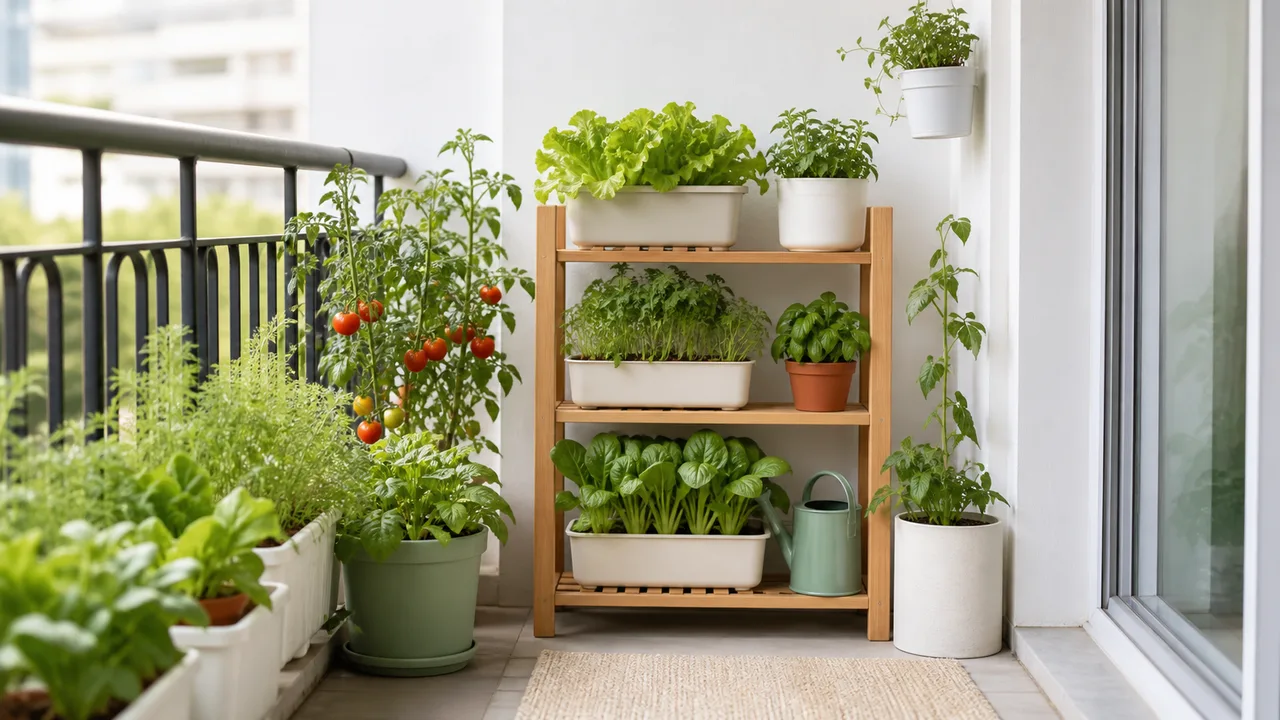
Wilting, yellow leaves, slow growth, and leaf spots do not prove that a balcony garden is overwatered or overcrowded. Start with the container, growing medium, and spacing records before choosing a remedy. The safe order is: check moisture, confirm drainage, compare actual spacing with crop instructions, then look for crop-specific pests or disease.
Start with observations, not a diagnosis
Record which plants are affected, when symptoms began, recent rain or watering, and whether the growing medium is wet below the surface. University of Maryland Extension notes that wilting can occur when roots are too dry or too wet, so adding water to every wilted plant can worsen the problem.
Look for patterns:
- one pot versus every pot;
- lower leaves versus new growth;
- wet medium versus dry medium;
- one crowded patch versus correctly spaced plants;
- symptoms after rain, irrigation, transplanting, or a temperature change.
Photographs and dates help a local Extension diagnostic service evaluate a persistent problem. They do not turn this guide into a diagnosis.
Check overwatering in a safe order
Check below the surface
Feel the medium below its surface before watering. For a lightweight pot, compare its current weight with the weight after a thorough watering. Do not use a fixed weekday schedule as proof that water is needed.
Confirm that excess water can leave
Inspect drainage openings for blockage. After watering, excess should leave through the drainage holes. Empty detachable saucers so water is not drawn back into the container. A container sitting where its drainage is obstructed needs a placement correction before another watering rule.
Separate two opposite failures
If medium has dried so severely that it has pulled from the pot edge, new water may run down the gap without rewetting the center. That is not overwatering. Rehydrate gradually according to container guidance.
If the root zone remains saturated because water is applied too often or cannot drain, stop automatic watering and correct the drainage or schedule. Saturated pore spaces lose air, which can injure roots and contribute to root disease. Do not add fertilizer as a substitute for this correction.
Check crowding separately
Compare the number of plants and their mature dimensions with the seed packet, cultivar information, or local crop guide. Do not judge only by how much bare mix was visible at planting.
UMD identifies three crowding effects in container vegetables:
- reduced air circulation can increase the risk of leaf infection;
- leaves compete for light;
- roots compete for moisture, nutrients, and growing space.
An undersized container can create similar root-zone competition even when only one plant is present. Check both plant spacing and container volume.
Choose the least disruptive correction
For young seedlings, thin to the documented spacing. Cut unwanted seedlings at the medium surface when pulling them would disturb neighboring roots. Do not promise that every removed seedling is safe to eat; crop identity and food-safety conditions must be known first.
For mature plants, do not tear apart an intertwined root mass merely to meet a spacing number. Decide whether to remove one plant, move an intact plant only when transplant guidance supports it, or end the weaker crop. Install required supports without damaging roots.
If decline continues after drainage and spacing corrections, or the cause remains unclear, contact a local diagnostic service rather than applying a pesticide or fertilizer without first identifying the problem.
Change one control at a time
Use a short recovery log:
| Date | Medium check | Drainage result | Spacing/container check | Action | New observation |
|---|---|---|---|---|---|
First correct a blocked drain or clearly unnecessary watering. Reobserve before changing fertilizer, light, and several other variables at once. This does not prove causation, but it makes the next diagnostic decision easier to interpret.
Stop and seek local help when needed
Escalate when symptoms spread rapidly, a food crop may have contacted an unknown chemical, the container cannot drain safely, or the cause remains unclear. Provide the crop and cultivar, photos, timeline, watering record, container dimensions, medium label, fertilizer and pesticide labels, and recent weather.
The goal is not to declare that every struggling balcony plant has “root rot” or “crowding stress.” It is to rule out correctable container conditions before making a more specific claim.
Sources
This guide provides general educational information. Conditions, regulations, structures and plant requirements vary; verify decisions against your own site and relevant local guidance.