Budget Balcony Gardening Tools for Beginners
A beginner balcony garden does not need a miniature garden center. For one to three containers, “tools” means anything that performs five jobs: hold the right root volume, provide a suitable growing medium, deliver water, support the select
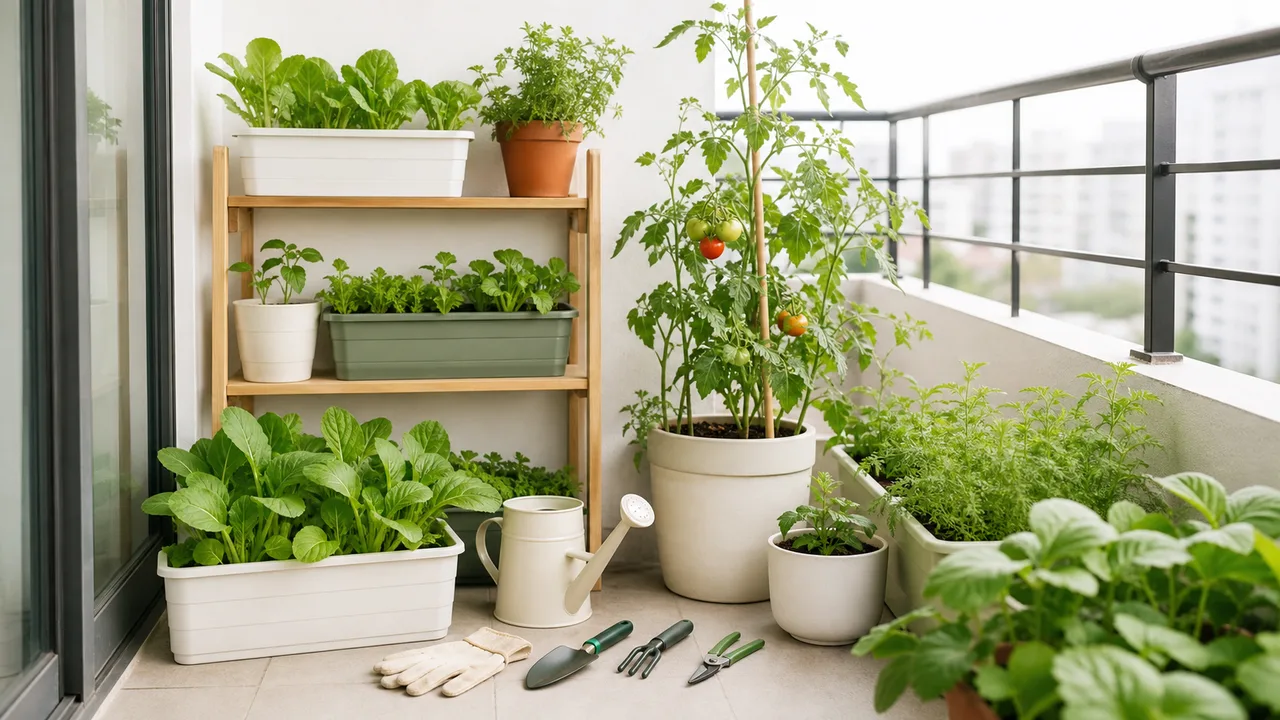
A beginner balcony garden does not need a miniature garden center. For one to three containers, “tools” means anything that performs five jobs: hold the right root volume, provide a suitable growing medium, deliver water, support the selected crop, and let you handle or cut plant material safely. Buy for those jobs in that order.
This guide does not quote a fixed starter price. Retail prices and currencies vary across the site's English-language markets, and a false total would age quickly. Set a local spending cap, use the allocation plans below, and record actual prices before checkout.
The five essential functions
1. A crop-sized container that drains
Buy: A stable container with the volume required by the chosen crop and a working drainage or overflow system.
Reuse: A clean, intact container made from material appropriate for its prior use and the intended food-growing application, provided you can create safe drainage. Do not repurpose a vessel that held hazardous chemicals or has unknown contamination.
Choose by: usable volume, depth, stability, drainage, empty weight, and how quickly the material loses moisture. Plastic is comparatively light and nonporous; terracotta can dry faster; stone or concrete adds stability but also substantial weight. Confirm balcony placement and load questions with the responsible property or building authority.
Do not economize by: putting a large fruiting crop in a tiny pot. University of Maryland Extension places standard tomato, pepper, eggplant, and cucumber in a large-crop band of at least 8–10 gallons of medium, while some dwarf forms may fit 4–6 gallons. Read the cultivar guidance.
2. Container growing medium
Buy: A bag labeled for containers or potting use, in enough quantity for the actual container volume.
Reuse: Leftover unopened or well-stored mix if it is clean, drains normally, and you know what fertilizer it contains. Reusing old crop mix requires more judgment about disease, pests, structure, and depleted nutrients; it is not the default beginner saving.
Choose by: intended use, volume, drainage and moisture-retention ingredients, and whether fertilizer is already included.
Do not economize by: filling the pot with straight garden soil. Penn State Extension warns that it can be heavy and dense in a container, limiting drainage and root aeration.
3. A controlled way to water
Buy: A small watering can or hose attachment only if your current vessel cannot deliver water gently to the medium without washing it away.
Reuse: A clean jug or bottle with a controllable pour. Label it for garden use and keep it separate from food and household chemicals.
Choose by: reach, filled weight, control, and whether you can carry it without spilling through the home. For a few pots, a large professional wand is usually unnecessary.
Do not economize by: buying a moisture gadget instead of learning to inspect the container. Pot size, material, heat, wind, and plant growth all change watering frequency. Check conditions and water thoroughly when needed, allowing excess to drain.
4. Support for crops that need it
Buy: A stake, cage, or trellis matched to the mature plant and legal attachment options.
Reuse: Sound stakes or a freestanding frame without sharp edges, contamination, or weak joints. Soft plant ties can be cut from suitable fabric; inspect them as stems thicken.
Choose by: mature height and weight, wind exposure, storage, and whether the support stands safely without fastening to a prohibited railing.
Do not economize by: delaying support until a fruiting plant is top-heavy. Installing it while the plant is young reduces root disturbance and emergency tying.
5. One handling and cutting solution
Buy: Usually nothing at first. Clean household scissors reserved for light plant material and a spoon or scoop can cover small jobs.
Reuse: A scoop made from a clean food container can move mix; gloves you already own can reduce mess where appropriate.
Choose by: the actual stem size and task. A mature woody herb may justify bypass pruners later; lettuce and soft herbs do not.
Do not economize by: using a dull or contaminated blade. Clean the tool, keep fingers clear, and store it safely.
Run every reused item through four checks
- Known history: Reject containers that held pesticides, fuel, solvents, or unknown industrial material.
- Food-growing suitability: Do not assume that every plastic object is suitable for prolonged sun, heat, and edible-crop use. When uncertain, choose a purpose-made container.
- Drainage and strength: Confirm that holes will not split the base and that handles or rims can carry the filled container.
- Cleanability: Wash away debris and follow reliable sanitation guidance when reusing seed trays or pots. Never mix cleaning chemicals, and rinse as directed.
Reuse saves money only when the item still performs safely. A free undersized pot that causes repeated crop failure is not a bargain.
Three ways to allocate your cap
These percentages are planning examples, not market prices. “Container and tray” includes any surface protection required by your location.
| Plan | Container and tray | Growing medium | Seeds/one transplant | Watering and labels | Support/contingency | Best when |
|---|---|---|---|---|---|---|
| Lean reuse | 15% | 50% | 20% | 5% | 10% | You already have a safe, crop-sized container and a pour vessel |
| Balanced starter | 35% | 35% | 15% | 5% | 10% | You need a new container but can reuse basic hand tools |
| Convenience-first | 45% | 25% | 10% | 10% | 10% | A self-watering container or lightweight purpose-made setup solves a real care constraint |
If the local price of an adequate container breaks the cap, change the crop or start with one pot. Do not shrink the root volume to preserve a multi-pot shopping list.
Match add-ons to the crop
- Leaf lettuce and quick greens: shallow crop-appropriate container, mix, seed, label, and watering vessel. Skip cages and pruners.
- Herbs: add scissors only when regular harvesting begins. Mint is often kept in its own container because of its spreading habit.
- Compact pepper or eggplant: budget for a stable pot and a simple support; do not spend the support allowance on decorative mini tools.
- Tomato: reserve money for the larger container and cage before accessories. A cheap undersized setup shifts the cost into replacement plants and repeated watering.
- Cucumber: include a permitted, stable trellis in the initial plan. String attached to an unapproved railing is not a free substitute.
Upgrades to buy only when a trigger appears
Self-watering container
Trigger: Your schedule and observed drying pattern make ordinary watering unreliable, and the crop/setup is suitable for a reservoir system.
Wait if: You have not yet learned how quickly the current pot uses water. A reservoir reduces some watering frequency; it does not remove inspection, overflow, cleaning, or nutrient management.
Bypass pruners
Trigger: You regularly cut stems too thick for clean scissors.
Wait if: You grow only tender greens and small herbs.
Hand trowel
Trigger: You refill or repot several containers and a scoop is awkward.
Wait if: You are filling one small planter directly from the bag.
Drip irrigation
Trigger: Multiple pots in one area have documented watering demand, the system is permitted, and runoff can be managed.
Wait if: You have two pots or have not observed their different needs. Automation applied to unknown requirements can automate the wrong amount.
Moisture meter
Trigger: A specific container is hard to assess and you are willing to verify readings against actual mix condition.
Wait if: The purchase is meant to replace routine observation. A moisture reading alone does not identify whether poor growth comes from drainage, restricted roots, heat, nutrition, or disease.
What not to buy yet
- A matching set of miniature hand tools when household items already perform the tasks.
- Fertilizer before reading what the potting mix contains and what the chosen crop requires.
- Pest-control products before identifying a pest and confirming the label permits the crop, site, and use.
- A decorative pot cover that traps drainage water without a plan to empty it.
- A large trellis before confirming its footprint, wind behavior, and attachment rules.
- Bulk seed packs for a one-container trial; seed viability and storage matter more than a low per-seed price you never use.
- A grow light for an outdoor balcony crop unless you have separately planned an indoor growing setup with electrical and fire safety in mind.
One-page shopping worksheet
Write this before shopping:
Crop and cultivar:
Mature height/spread:
Required container volume/depth:
Available direct sun:
Permission/load/drainage questions resolved: yes / no

Already own safely:
- container/tray:
- watering vessel:
- scoop/scissors/gloves:
- support:

Must buy:
- growing medium volume:
- seed or one transplant:
- missing functional item:

Local spending cap and currency:
Recorded total before checkout:
One item deliberately postponed:
The budget win is a complete one-pot system, not a cart full of inexpensive fragments. Spend first on root volume and growing medium, because no specialized gadget can repair a crop that begins in the wrong container.
Sources
- Penn State Extension: Container Vegetable Gardening—Four Keys to Success
- University of Maryland Extension: Types of Containers for Growing Vegetables
- University of Maryland Extension: Growing Vegetables in Containers and Salad Tables
- University of Illinois Extension: 6 Tips for Watering Container Gardens
- University of Maryland Extension: Starting Vegetable Seeds Indoors
This guide provides general educational information. Conditions, regulations, structures and plant requirements vary; verify decisions against your own site and relevant local guidance.