Everyday Cooking Herbs and Side Vegetables for a Balcony
Choose balcony crops from meals, not from a generic “easy herb” list. Review the last week of cooking and mark ingredients used by the handful, the sprig, or the leaf. Then select no more than three crops whose light, root volume, moisture
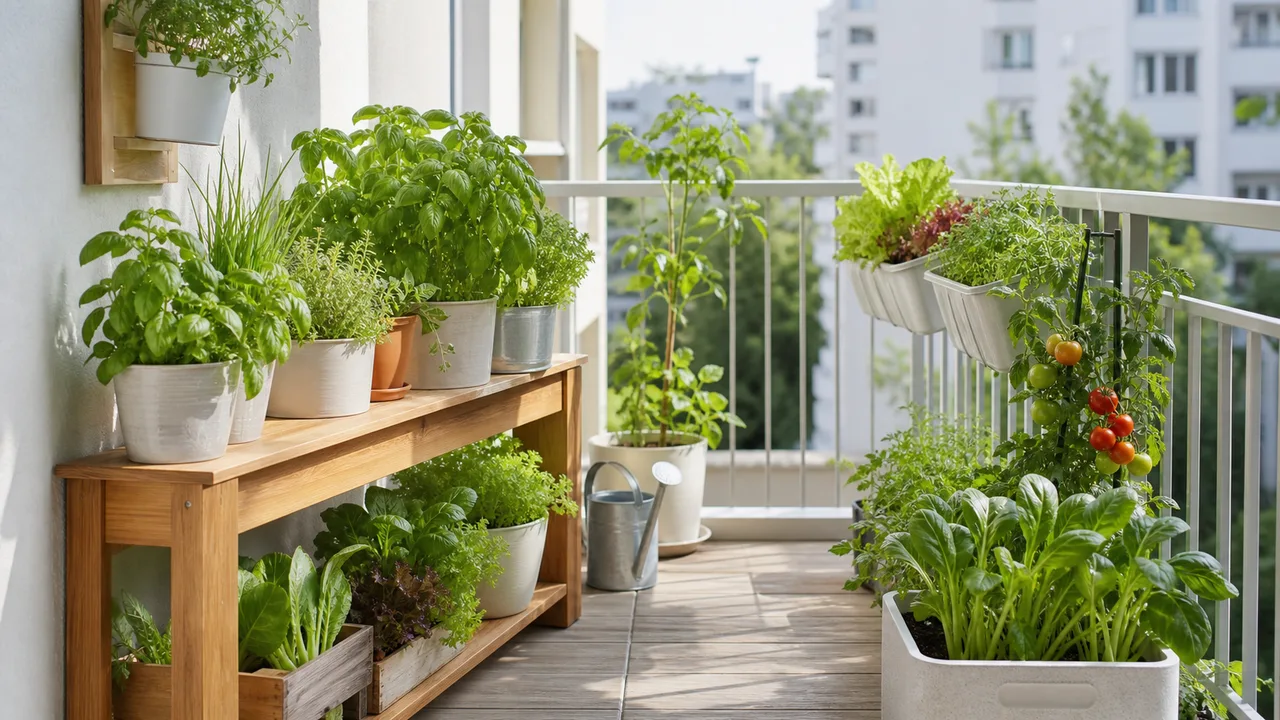
Choose balcony crops from meals, not from a generic “easy herb” list. Review the last week of cooking and mark ingredients used by the handful, the sprig, or the leaf. Then select no more than three crops whose light, root volume, moisture preference, and harvest pattern fit the balcony.
Build the shortlist by kitchen job
| Kitchen job | Candidate | Harvest style | Care note |
|---|---|---|---|
| Tender leaves for sauces or finishing | Basil | Pinch shoot tips and take leafy stems | Annual herb; follow local frost and temperature guidance |
| Fresh chopped garnish | Parsley | Remove outer stalks near the base | Larger herb; UMD lists 5 gal or more |
| Onion-like garnish | Chives | Snip leaves near the base | Perennial habit; tolerates some light shade |
| Bright leaves for salsa/curry | Cilantro | Take leaves before flowering; use the local calendar for replacement sowing | Timing depends on local conditions and the chosen cultivar |
| Leaves for drinks or salads | Mint | Cut stems/leaves as needed | Keep in its own container to control spread and moisture |
| Small savory sprigs | Thyme or oregano | Snip sprigs without stripping the plant bare | Let the mix dry more between waterings than basil |
| Quick salad side | Leaf lettuce | Outer leaves or cut-and-come-again by cultivar/system | Cool-season crop; packet and local calendar control |
| Crisp side vegetable | Radish | Follow the packet's harvest cue | Use the local calendar to plan any replacement sowing |
| Cooked leafy side | Swiss chard | Remove outer leaves | Needs more volume and spacing than baby greens |
These are use patterns, not yield promises. A crop earns space when its normal harvest unit matches the way you cook.
Six crop cards
Basil: for repeated leafy stems
Choose basil for frequent sauces, salads, or finishing leaves when local frost and temperature guidance supports it. UMD identifies basil as an annual and advises planting after frost danger has passed. Keep it in the more-consistent-moisture group. Pinch shoot tips to encourage branching and harvest before the plant is allowed to invest heavily in flowers when leaves are the goal. Replace it when leaf production declines rather than keeping an unproductive pot for sentiment.
Cilantro: plan for replacement, not permanence
Cilantro leaf harvest changes when the plant flowers and forms seed. UMD notes that hot, humid weather can trigger bolting, so use local conditions rather than a universal month. Harvest leaves before flowering when leaves are the goal, and use the local calendar for any replacement sowing. If your kitchen also uses coriander seed, that is a different harvest goal and the plant must be allowed to mature.
Parsley: a larger steady garnish pot
Parsley is not a tiny decorative herb in UMD's container framework; large-statured herbs such as parsley are assigned 5 gallons or more. Harvest the outside stalks close to the base so new central growth remains. Choose parsley when weekly use justifies the larger pot.
Chives: small cuts from an established clump
Snip chive leaves near the base and leave the crown intact. Chives can tolerate some light shade, which can make them useful where basil would be weak. Do not plant a large permanent clump in a mixed annual tray if seasonal replacement and root division will become awkward.
Mint: one pot, one boundary
Mint fits drinks, salads, sauces, and teas, but its spreading growth makes a separate container the clearest boundary. It belongs with herbs that prefer more consistent moisture, not in the same small pot as thyme merely because both appear in the same recipe collection.
Thyme or oregano: the drier-care pot
These herbs prefer to dry more between waterings than basil, mint, parsley, and cilantro. Give them drainage and strong light appropriate to the crop. Harvest sprigs as needed without removing most foliage at once. Their role is small, frequent seasoning, so one healthy plant can be more useful than a crowded assortment.
Add one side vegetable
Leaf lettuce
Choose it for salads and sandwich leaves during a locally suitable cool period. UMD lists a 0.5-gallon minimum for leaf lettuce, but a larger shared tray can buffer moisture and provide spacing. Follow the cultivar's harvest method; not every lettuce is managed as cut-and-come-again.
Radish
Choose radish when the kitchen uses it and you want a short crop cycle. Thin to packet spacing, follow the packet's harvest cue, and use the local calendar to decide whether another sowing fits.
Swiss chard
Choose chard for cooked greens or sturdy young leaves. UMD lists a 2-gallon minimum. Harvest outside leaves while preserving the center and give retained plants room to expand.
Scallions can also fit many kitchens, but use packet-specific spacing and container guidance; this article does not invent one depth or regrowth promise for all Allium types.
Do not combine crops by recipe alone
Use separate containers unless crops share root volume, light, moisture, season, and replacement schedule. UMD groups basil, mint, parsley, and cilantro as needing more consistent root moisture. Rosemary, thyme, oregano, and lavender prefer to dry more between waterings. That care distinction is a better grouping rule than an unsupported companion-planting claim.
Mint gets its own pot. Radish gets space to form roots. Cilantro scheduled for replacement should not be buried under a long-lived herb. A mixed planter is successful only when maintenance remains coherent.
Three practical three-pot plans
Frequent sauces and salads
- Basil in its own moisture-consistent pot.
- Parsley in a larger pot.
- Leaf lettuce in a seasonal tray.
Salsa and fresh garnish
- Cilantro, with a second sowing planned.
- Chives for onion-like garnish.
- Radish for a whole-crop side.
Savory cooking with lower leaf volume
- Thyme or oregano in a drier-care pot.
- Parsley in its own moisture-consistent pot.
- Swiss chard for cooked leaves.
Adjust the crops to local season and measured light; the plan is defined by roles and compatible care, not by these exact species.
Use a harvest-and-replacement card
For each pot, record:
Crop and cooking role:
Usual harvest unit: sprig / leaf / stalk / whole plant
Moisture group: consistent / dries more between watering
First harvest cue:
Flowering response: harvest leaves / allow seed crop
Replacement cue:
Next sowing or transplant window from local calendar:
Review it weekly. Harvest what the kitchen will use, identify crops that are flowering or declining, and prepare replacements before an annual herb becomes an empty gap. A kitchen balcony works when the harvest rhythm matches meals and the care groups make sense—not when it contains the longest possible herb list.
Sources
- UMD Extension: Growing Vegetables in Containers and Salad Tables
- UMD Extension: Care of Herbs and Starting Herbs from Seed
- UMD Extension: Harvesting and Preserving Herbs
- UMN Extension: Growing Herbs in Home Gardens
- UMN Extension: Growing Parsley
- UMN Extension: Growing Chives
- UMD Extension: Growing Mint in a Home Garden
- UMD Extension: Growing Basil in a Home Garden
- UMD Extension: Cilantro/Coriander
- UMN Extension: Growing Spinach and Swiss Chard
This guide provides general educational information. Conditions, regulations, structures and plant requirements vary; verify decisions against your own site and relevant local guidance.