Balcony Growing Through a Long Hot Season
“Southern balcony” is not a climate definition. A long hot season may be humid, dry, frost-free, monsoonal or interrupted by cool periods, and the same compass direction means different solar exposure in opposite hemispheres. Plan from meas
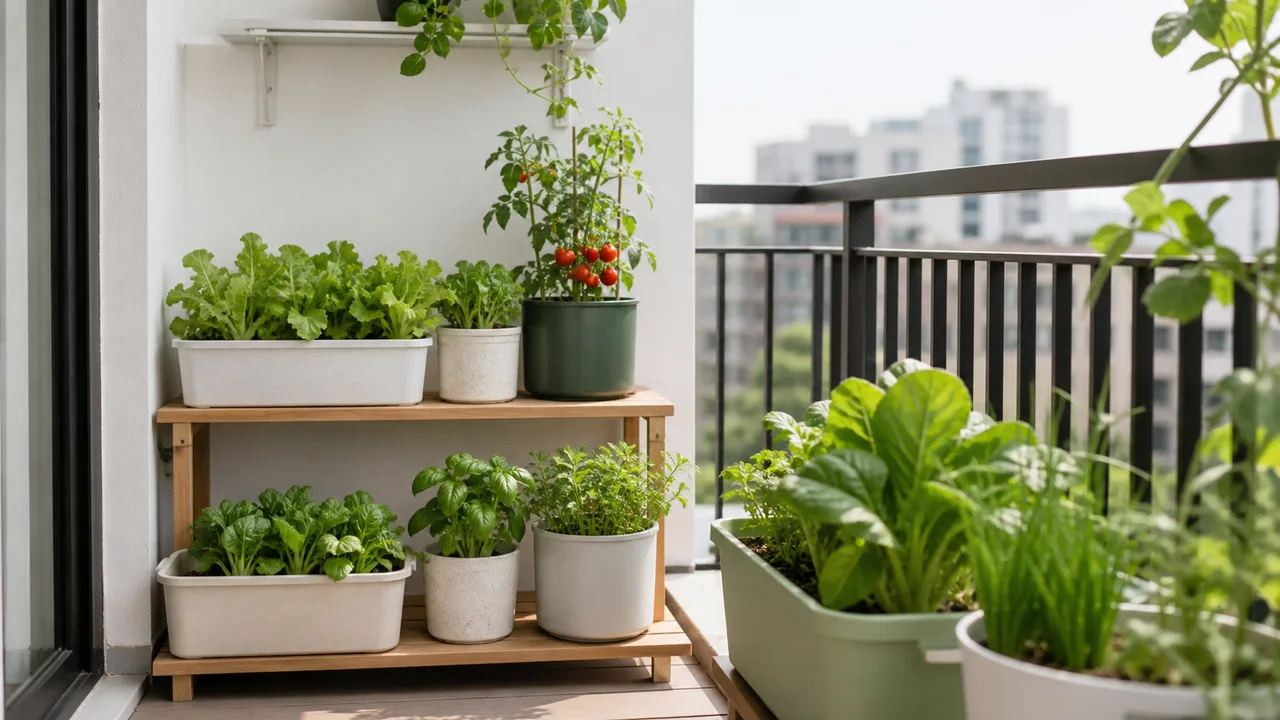
“Southern balcony” is not a climate definition. A long hot season may be humid, dry, frost-free, monsoonal or interrupted by cool periods, and the same compass direction means different solar exposure in opposite hemispheres. Plan from measured conditions: local frost or freeze dates where relevant, the months of sustained heat, rainfall and humidity pattern, and the balcony’s own light and root-zone heat.
This guide explains how to divide a long hot season into usable planting windows without claiming that one calendar fits every warm region.
Create a heat-season profile
Collect four local inputs:
- Cool boundary: local last and first frost or freeze periods, if the location experiences them.
- High-heat period: the weeks when local guidance warns that heat-sensitive crops decline or need protection.
- Moisture pattern: distinguish hot-dry conditions from hot-humid or rainy conditions.
- Balcony exposure: observe morning versus afternoon sun, reflected heat, wind and how quickly each container dries.
Use a local Extension or meteorological calendar as a starting point, then check current forecasts. Even within Maryland, University Extension reports frost-free seasons ranging from roughly 155 to 230 days. A regional name cannot replace local data.
Divide the year by crop response
Use milder windows for cool-season crops
Lettuce, spinach, radish and many brassica greens are cool-season choices. In warm climates they may fit the cooler part of the year rather than midsummer. University of Minnesota Extension notes that lettuce can bolt and become bitter in summer heat; local warm-region calendars determine when a cooler window actually occurs.
Do not transfer a northern spring date to a warm climate. Select the local period first, then check the crop and cultivar instructions.
Give warm-season crops a realistic window
Tomatoes, peppers, eggplants, cucumbers and basil need warm conditions, but “warm-season” does not mean unlimited heat. Select locally recommended cultivars and planting dates. A crop may need to establish before the harshest period or occupy a different warm window in a very hot climate.
The University of Arizona’s container guidance for the Southwest desert stresses that outdoor container media and roots can become very hot. It recommends shading the container while keeping leaves in the light. Treat that as hot-dry desert guidance, not a universal prescription for every balcony.
Keep local humidity in the decision
Hot-humid and hot-dry balconies should not share an automatic watering schedule. In either case, inspect the growing medium and container drainage. In humid or rainy periods, do not add water merely because the calendar says so. In hot, dry wind, check more often because confined media can lose moisture quickly.
Avoid diagnosing disease or nutrient deficiency from one symptom. If decline persists after basic light, drainage and moisture checks, use a local diagnostic service or Extension resource.
Protect roots before adding more water
Container roots cannot explore surrounding soil for cooler or wetter zones. Use a container large enough for the mature crop, drainage holes that remain open, and a lightweight soilless medium. Place dark or exposed pots so the root zone is not needlessly heated by harsh afternoon exposure, where local conditions warrant it.
Shade decisions need care. Moving or shading the container while keeping foliage appropriately lit is different from placing the entire crop in deep shade. Use crop-specific light guidance and observe the site before installing anything. Any shade cloth, screen or railing attachment must comply with building rules and be secured according to its manufacturer or a qualified local professional; this article does not specify wind-load engineering.
Water by root-zone evidence
Check below the surface and learn the weight of a recently watered container. Water thoroughly enough to wet the root zone and allow excess water to leave through drainage holes. Recheck sooner during hot, windy conditions, but do not promise a universal once- or twice-daily schedule.
Check local building rules and position drainage so it does not discharge onto neighboring property or a walking route.
A three-window planting framework
- Mild window: choose locally recommended cool-season crops.
- Warm transition: establish warm-season crops when local temperature and frost guidance permits.
- Peak heat: retain only crops and cultivars recommended for local peak conditions; protect root zones and monitor moisture. Replace struggling cool-season crops rather than repeatedly forcing them through unsuitable heat.
Where the climate has another mild period, repeat the cool-season step using the local planting calendar. Where frost never occurs, temperature, rainfall, pest pressure and crop response—not the absence of frost alone—still define the windows.
Make a local decision card
Before planting, record:
- local calendar source and date checked;
- current forecast;
- crop and cultivar;
- packet maturity information;
- container size and drainage;
- observed morning and afternoon exposure;
- moisture-check method;
- the condition that will trigger moving, replacing or ending the crop.
This turns a vague “southern” recommendation into a repeatable plan tied to the balcony’s actual heat and season.
Sources
- University of Maryland Extension — When to Plant Vegetables
- University of Minnesota Extension — Planting Vegetables in Midsummer for Fall Harvest
- University of Arizona Cooperative Extension — Container Gardening in the Southwest Desert
- University of Arizona Cooperative Extension — Ten Steps to a Successful Vegetable Garden
- University of Maryland Extension — Growing Vegetables in Containers and Salad Tables
This guide provides general educational information. Conditions, regulations, structures and plant requirements vary; verify decisions against your own site and relevant local guidance.