Balcony Growing in a Short Frost-Free Season
A balcony is not “northern” in any useful gardening sense until you know its local frost dates and usable growing window. Start with three facts: the average last spring frost, the average first autumn frost, and the number of days the chos
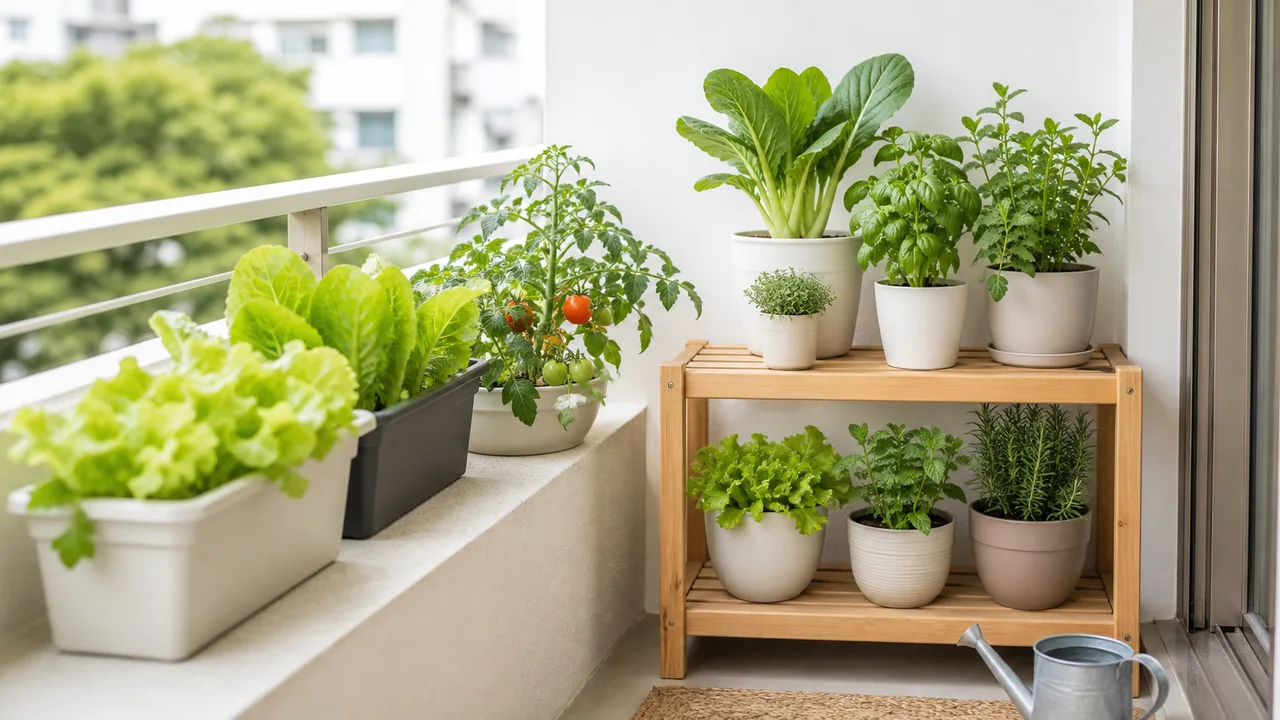
A balcony is not “northern” in any useful gardening sense until you know its local frost dates and usable growing window. Start with three facts: the average last spring frost, the average first autumn frost, and the number of days the chosen variety needs to reach harvest. Then check the current forecast before planting. Average dates describe risk, not a guarantee.
This guide is for balconies with a relatively short frost-free season, wherever they are located. It does not assume a country, hemisphere, or hardiness zone.
Build a local season card
Write these items on one card before buying plants:
- Average last spring frost: obtain it from a local meteorological or Extension source.
- Average first autumn frost: use the same local source and note that the date varies from year to year.
- Expected frost-free window: count the days between those two averages.
- Balcony observations: record direct-light periods, strong wind, and whether walls or glazing create unusual warmth or shade.
- Crop timing: copy the days-to-maturity information and transplant guidance from the seed packet or local crop guide.
University of Maryland Extension defines the growing season as the frost-free period between the last spring frost and first autumn frost. Its own state ranges from about 155 to 230 frost-free days, which shows why a compass label alone cannot set a planting calendar.
Sort crops by the time and cold they require
Use three working groups rather than a universal “northern crops” list.
Short, cool-season opportunities
Leaf lettuce, spinach, arugula, radish and peas can fit cool shoulder periods in suitable local conditions. Some tolerate frost better than warm-season crops, but tolerance differs by crop and stage. Consult the packet and local guidance instead of treating “cool-season” as freeze-proof.
These crops can be useful before the warm-season window opens or after an earlier crop finishes. Heat can reduce lettuce quality and trigger bolting, so a cool period matters more than the word spring or autumn on a generic calendar.
Long-season, heat-loving crops
Tomatoes, peppers and eggplants require warmth and commonly need a substantial part of the frost-free season. In a short window, compare the variety’s maturity information with the time actually available. Starting plants indoors or buying transplants may recover time, but neither makes cold outdoor conditions safe.
Do not assume a cherry tomato is automatically a compact or early plant. Check the cultivar’s documented mature size and maturity period separately.
Frost-sensitive fast crops
Beans and some other warm-season crops may mature faster than peppers or eggplants, yet frost can still end them. They belong inside the warm window even when their maturity period appears short.
Work backward from the first autumn frost
For each crop, identify its maturity estimate and decide whether the packet counts from sowing or transplanting. Work backward from the local first-frost period, then leave a buffer for slower growth, weather variation and the harvest window. Do not present the resulting date as a guarantee.
This calculation leads to three defensible choices:
- Fits: the crop and cultivar have a plausible path to harvest inside the local window.
- Fits with a head start: use an appropriately hardened transplant after local outdoor conditions are suitable.
- Does not fit this cycle: choose a shorter-season cultivar or a different crop instead of relying on an unverified protection method.
If you start seedlings indoors, follow crop-specific timing and harden them before outdoor transplanting. A sunny indoor window is not automatically equivalent to suitable seedling lighting.
Use containers to manage—not erase—weather risk
Containers allow a grower to reposition plants, but their roots remain confined. Use a clean container with drainage and a lightweight soilless growing medium. Check moisture in the root zone rather than watering on a fixed weekday. Wind and warmth can make a container dry faster; cool cloudy weather can slow drying.
Never promise that a cover, wall or glazed balcony adds a fixed number of safe days. Product performance, ventilation, building rules and local forecasts differ. If using a cover, follow its instructions and monitor the plants rather than assuming protection.
A small short-season plan
Use one container for a quick cool-season crop and reserve a second for one warm-season transplant that fits the documented window. A third container can hold another short crop after the first harvest if the remaining local season and crop guidance allow it.
Before each transition, ask:
- Is the forecast suitable for this crop?
- Does the container drain and fit the mature plant?
- Are enough days left for harvest?
- Is the next crop tolerant of the expected conditions?
The goal is not to defeat a short season. It is to spend its limited warm days on crops that can realistically finish, while using cooler periods for crops that genuinely suit them.
Sources
- University of Maryland Extension — When to Plant Vegetables
- University of Minnesota Extension — Crop and Field Planning Tools for Vegetable Farmers
- University of Minnesota Extension — Planting Vegetables in Midsummer for Fall Harvest
- University of Minnesota Extension — Starting Seeds Indoors
- University of Maryland Extension — Growing Vegetables in Containers and Salad Tables
This guide provides general educational information. Conditions, regulations, structures and plant requirements vary; verify decisions against your own site and relevant local guidance.