Low-Budget Recycled Container Balcony Sample Plan
This is a planning example, not a report about a real balcony or a promise of a particular price or harvest. Here, “low-budget” describes a purchase-priority method; affordability can be confirmed only after the worksheet is filled with cur
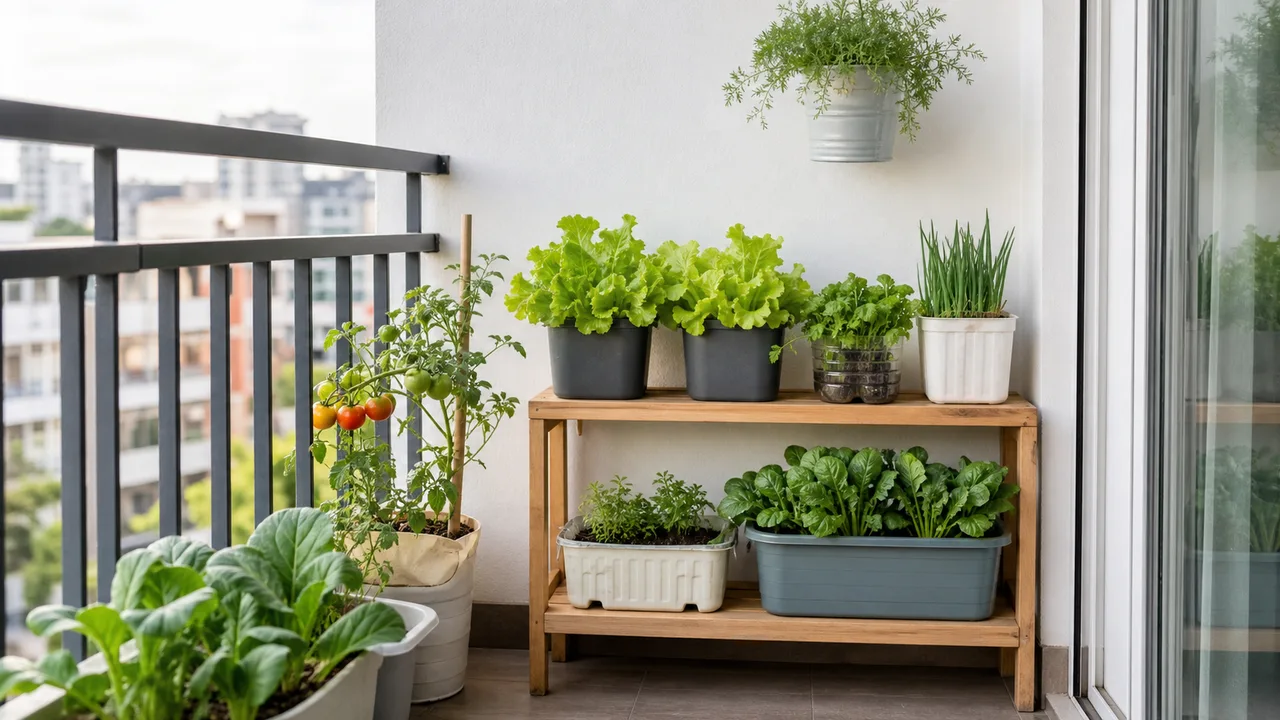
This is a planning example, not a report about a real balcony or a promise of a particular price or harvest. Here, “low-budget” describes a purchase-priority method; affordability can be confirmed only after the worksheet is filled with current local quantities and prices. The budget rule is simple: reuse only containers whose previous contents and material are known to be suitable for food growing; buy the growing medium and other missing essentials; postpone decorative upgrades.
Apply a pass/fail container gate
Apply the following gates. The source-backed horticultural rules cover toxic previous contents, crop fit, and drainage. Excluding unknown-history or damaged materials is a conservative safety choice. Placement and tool use must be checked against applicable local rules and manufacturer instructions.
Reject a candidate container when any of these is true:
- it previously held pesticides, paint, fuel, solvents, or another hazardous material;
- its previous contents are unknown;
- the material is damaged, brittle, or cannot safely hold wet medium;
- drainage cannot be added without creating an unsafe edge or weakening the container;
- its size does not fit the mature crop;
- local building or rental rules prohibit its placement.
University of Arizona Cooperative Extension advises that food-growing containers should not be made from toxic material or have stored toxic substances. Its guide identifies food-safe plastic buckets as a durable option. Oregon State's home hydroponics guidance likewise says to use food-grade containers and avoid buckets formerly used for pesticides or paints.
“Recycled” does not override this gate. If the history is unknown, do not use the item for edible crops.
Check function before appearance
A passing container must hold the growing medium while allowing excess water to drain. Check that holes are present and stay unobstructed. Match container dimensions to crop-specific guidance; a shallow leafy-green container does not establish that the same vessel fits a mature tomato.
Do not add gravel as a substitute for drainage. Use a container medium intended for pots rather than dense soil dug from the ground. Place the container so drainage follows local property rules and does not create a walking hazard.
Any cutting or drilling must follow the tool manufacturer’s instructions; this is an external tool-safety check, not a rule attributed to the cited gardening sources. If the material cannot be altered safely, choose another container rather than improvising.
Buy essentials in priority order
Use this order when funds are limited:
- Safe container: reused only if it passes the gate; otherwise buy an appropriate container.
- Container growing medium: fresh packaged potting or container mix is the simplest controlled starting point.
- Seed or transplant: choose one crop that fits the container, season, and available light.
- Fertilizer only as required: check whether the mix already contains fertilizer and follow the product label.
- Drainage management: use a permitted tray or placement solution where runoff must be controlled.
Labels can be made from clean reusable material if they remain legible. Decorative covers, matching pots, specialized organizers, and extra crops are optional.
Use a fill-in budget instead of invented prices
Prices depend on location, date, currency, container availability, and product size. Fill in actual local prices before deciding whether reuse saves money.
| Item | Reused candidate | Passes safety/function gate? | Local price | Required now? | Decision |
|---|---|---|---|---|---|
| Container | Yes | ||||
| Potting mix | No | N/A | Yes | ||
| Seed/transplant | No | N/A | Yes | ||
| Fertilizer | Label check | Maybe | |||
| Drainage solution | Local-rule check | Maybe | |||
| Support | Crop-specific check | Maybe |
Add the required-now rows to produce the starting total. Keep optional items outside that total. Do not call a plan “low budget” until the currency, date, quantities, and actual local costs are recorded.
One-container sample
Choose one food-safe container with verified history, adequate volume for the selected crop, and functioning drainage. Fill it with container growing medium. Plant one crop according to packet spacing and local timing. Water only after checking the medium, then water thoroughly enough for excess to leave.
For a first trial, a locally suitable leafy crop or herb may reduce the need for a large support system, but the exact choice still depends on climate, light, container dimensions, and cultivar. This sample does not promise that a particular crop will be cheap or productive everywhere.
Record:
- container source and previous contents;
- dimensions and drainage check;
- medium and fertilizer labels;
- crop/cultivar and planting date;
- actual costs and quantities;
- any failure that makes the container unsuitable for reuse.
Expand only after the trial
Add another container only when the first one drains safely, fits the living space, and has a manageable care routine. Recalculate the budget rather than assuming the second container costs the same. A free vessel can still create costs for medium, tools, supports, runoff control, or replacement if it fails the safety gate.
Sources
This guide provides general educational information. Conditions, regulations, structures and plant requirements vary; verify decisions against your own site and relevant local guidance.