Sunny Small Balcony Tomato and Pepper Planning Guide
Sun alone does not make a small balcony suitable for both tomatoes and peppers. Confirm direct light, local temperature timing, mature plant size, container capacity, support, watering access, and permitted placement before buying plants. S
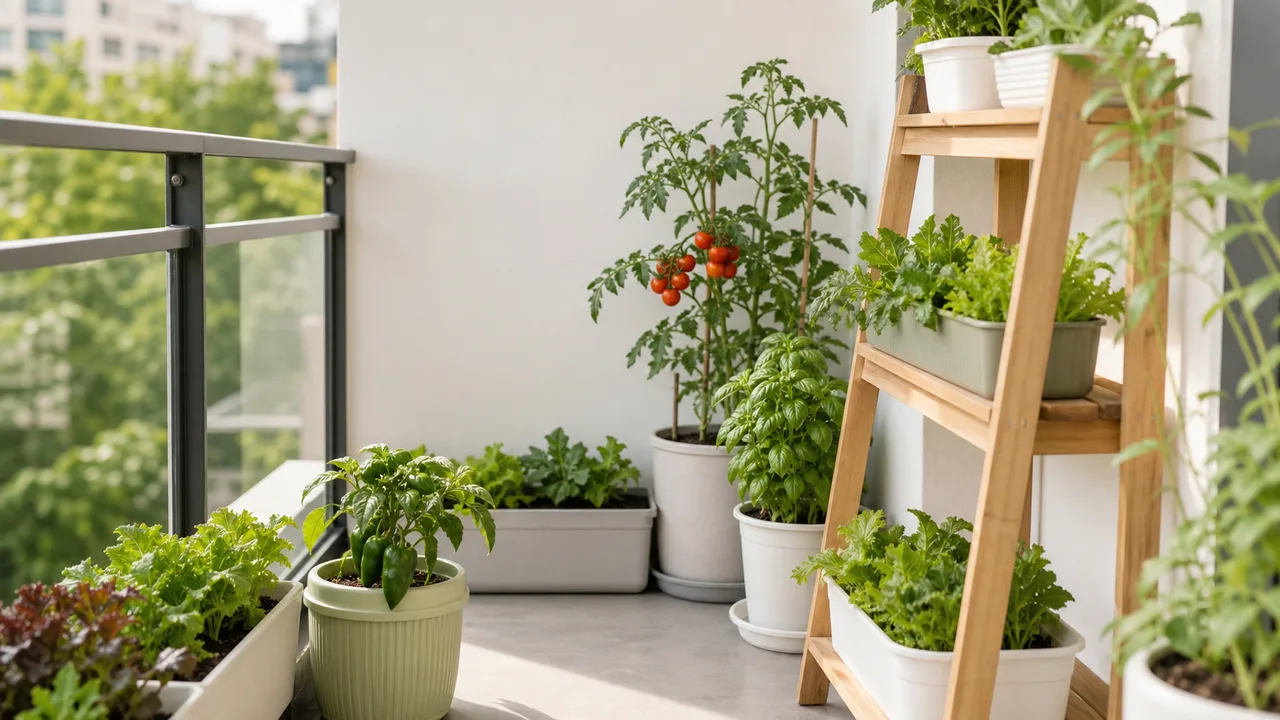
Sun alone does not make a small balcony suitable for both tomatoes and peppers. Confirm direct light, local temperature timing, mature plant size, container capacity, support, watering access, and permitted placement before buying plants. Start with one fruiting crop if the space cannot meet both sets of requirements.
Build a condition card
Record the proposed position rather than relying on the word “sunny”:
| Condition | Local observation or source | Decision |
|---|---|---|
| Direct-light period | Several representative days | |
| Hot reflected exposure | Wall, glass, metal, or pavement context | |
| Local planting window | Local Extension or planting calendar | |
| Mature cultivar dimensions | Seed packet or breeder information | |
| Container requirement | Crop/cultivar guidance | |
| Support method | Product instructions and property rules | |
| Runoff and access | Building/rental rules |
Do not use a single day or generic hemisphere season as a planting calendar. Tomatoes and peppers are warm-season crops. For tomatoes specifically, local heat extremes can disrupt pollination and fruit set.
Give each crop its own container decision
University of Maryland Extension currently lists five gallons as a minimum for standard tomatoes and peppers, and two gallons for cherry tomatoes. These are source-specific minima, not ideal sizes or yield guarantees. A cultivar label or local guide may require more, and a small container can dry faster.
Follow the cultivar and container guidance for plant count and spacing. Choose a container with open drainage and medium intended for pots. Check the medium below the surface before watering, then water thoroughly enough for excess to leave. Do not leave detachable saucers holding water.
Install support before the plant needs rescue
Tomato and pepper growth habits vary. Read mature height, spread, and support needs before planting. Place the support without relying on an unapproved railing or façade attachment, and follow the support manufacturer’s assembly and loading instructions.
Do not claim that moving a heavy planted container near a wall makes it structurally safe. Confirm balcony capacity and placement with the responsible property or building authority.
Plan for flowering without promising fruit
Tomato flowers contain both male and female parts and are commonly moved by wind or vibration. Gentle flower tapping can aid pollen release, but it cannot overcome every cause of poor fruit set. University of Minnesota and Penn State Extension describe high temperature as one condition that can interfere with pollination or contribute to blossom drop; moisture and excessive nitrogen can also matter.
When flowers do not set fruit, record temperatures, watering, recent fertilizer, flower condition, and cultivar before changing several inputs. Do not automatically add fertilizer or apply a pesticide. Use the crop-specific diagnostic process and local Extension help when the cause remains unclear.
Pepper fruit set also depends on suitable growing conditions and cultivar. Follow local crop guidance rather than assuming the tomato troubleshooting rule transfers unchanged.
Use a one-crop pilot
If the balcony is small, choose either one compact tomato suited to containers or one pepper cultivar whose mature dimensions fit the verified space. Record:
- cultivar and source;
- planting date and local timing source;
- container dimensions and medium label;
- support and permission check;
- light and temperature observations;
- watering and fertilizer-label actions;
- flowering and fruit-set dates, if they occur;
- harvest amount in a labeled unit, if a harvest occurs.
Add the second crop only when the first container leaves sufficient verified space, access, support capacity, and care time. This plan is successful when it prevents an unsuitable purchase and produces a usable record—not when it invents a sunny-balcony harvest.
Sources
This guide provides general educational information. Conditions, regulations, structures and plant requirements vary; verify decisions against your own site and relevant local guidance.