Must-Grow and Avoid Vegetables for New Balcony Gardeners
No vegetable is a universal “must grow.” In this guide, “avoid” means “postpone until your balcony fits it,” not a permanent ban. A beginner's best first crop is one the household eats, whose light and mature size fit the site, and whose wa
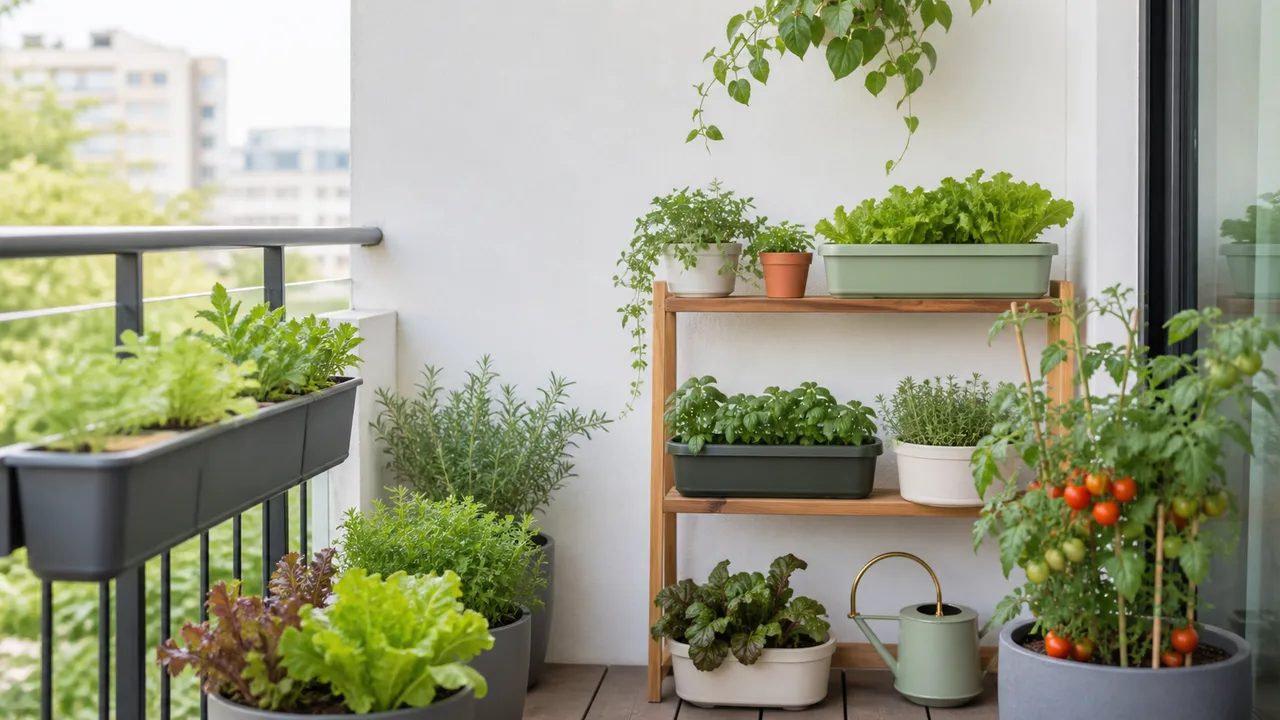
No vegetable is a universal “must grow.” In this guide, “avoid” means “postpone until your balcony fits it,” not a permanent ban. A beginner's best first crop is one the household eats, whose light and mature size fit the site, and whose watering can be maintained. Use the six questions below before using the shortlist.
The six-question fit gate
- Direct sun: UMD uses 3–5 hours as a planning range for cool-season greens and 6–8 hours for warm-season crops such as tomato, pepper, eggplant, and squash.
- Final root volume: Can the balcony hold the crop-sized container after it is filled and wet?
- Footprint: Will mature leaves or vines block the door, walkway, neighbor, or required access?
- Support: Can a stake or trellis stand safely without an unapproved railing attachment?
- Season: Does a local planting calendar place the crop in suitable temperatures for long enough to mature?
- Kitchen use: Will you harvest it often enough to justify the prime space?
If any essential answer is “no,” put the crop in avoid-for-now—not in a permanent blacklist.
Compare realistic first crops
Container figures are UMD's March 31, 2026 minima and should not be treated as ideal sizes. Cultivar guidance can call for more.
| Crop | UMD minimum | Light class | Support/space | Harvest pattern | Beginner fit |
|---|---|---|---|---|---|
| Leaf lettuce | 0.5 gal | Cool-season range | Low, compact | Leaves or whole head depending type | Strong when the season is cool enough |
| Radish | 1 pint | Cool-season range | Low; needs correct spacing | One root per plant | Strong for a short, visible cycle |
| Swiss chard | 2 gal | Cool-season range | Upright leaves | Repeated outer-leaf harvest | Strong when a longer-lived leafy crop is wanted |
| Bush bean | 2 gal | Warm, bright site | Compact bush; cultivar height varies | Pods over a limited period | Good if the household eats beans and local warmth fits |
| Cherry tomato | 2 gal minimum | Warm-season range | Support and regular monitoring | Repeated fruit harvest | Conditional; use compact cultivar and consider a larger pot |
| Pepper | 5 gal | Warm-season range | Narrower canopy; support may help | Repeated fruit harvest | Conditional on warmth and long season |
| Bush cucumber | 5 gal | Warm-season range | Trellis or lateral space | Repeated fruit harvest | Conditional on support, water, and mature dimensions |
| Summer squash | 10 gal | Warm-season range | Verify mature spread | Repeated fruit harvest | Postpone when the minimum volume or mature spread does not fit |
Grow now: crops with a clear first-cycle advantage
Leaf lettuce, when weather is cool enough
It offers a simple direct-sown or transplant path and can be harvested as leaves. Choose it when the balcony meets the cool-season light range and local temperatures are suitable. Avoid starting it into a forecast period of persistent heat merely because the pot fits.
Radish, when you want one short cycle
Radish makes the seed-to-harvest sequence easy to observe. Its constraint is spacing: overcrowding can limit root development. Select a cultivar and local sowing window, then follow packet depth and spacing.
Swiss chard, when repeated leaves matter more than speed
Chard needs more root volume than tiny greens but offers repeated outer-leaf harvest. It fits a cook who will use a small number of leaves regularly. Give each retained plant its proper spacing instead of filling the container for instant visual density.
One culinary herb, even though it is not a vegetable
If none of the vegetables matches the season, a frequently used herb can be the better learning crop. Group it by its documented moisture and light needs.
Conditional choices: grow after solving one extra constraint
Compact cherry tomato
Unlock conditions: strong light, a cultivar documented as compact, stable support, appropriate volume, and consistent observation. UMD lists 2 gallons as a minimum for cherry tomato, while its container guidance separately tells growers to look for bush, dwarf, or compact varieties. Check the cultivar's mature dimensions rather than inferring plant habit from fruit size.
Pepper
Unlock conditions: a warm, bright site and a season long enough for the selected cultivar. Check its documented mature width and support needs; the 5-gallon minimum and watering still require planning.
Bush cucumber
Unlock conditions: a permitted support or sufficient lateral room, 5-gallon minimum, frequent moisture checks, and a cultivar suited to the available space. Verify its mature dimensions and support instructions rather than relying on the word “bush” alone.
Avoid for now: mismatch-heavy projects
Corn
UMD places corn among the more challenging container crops. Reconsider it only when locally relevant crop guidance confirms that the available container volume, space, exposure and season fit the selected cultivar.
Melons and sprawling winter squash
UMD classifies melons as more challenging container crops. Postpone them unless crop-specific guidance confirms that the selected cultivar's mature spread, support and container needs fit the balcony.
Potatoes and sweet potatoes
UMD also classifies these as more challenging in containers. Consider them only after crop-specific guidance confirms that their container volume, watering and harvest requirements fit the site.
Full-size indeterminate tomatoes
Avoid when the only support is an unapproved railing, the walkway is narrow, or daily summer observation is unrealistic. Choose a genuinely compact tomato instead—or grow a leafy crop now and return to tomatoes later.
Three one-container starter choices
- Cooler site, salad use: leaf lettuce.
- Short learning cycle: radish.
- Warm bright site with more commitment: one compact pepper or cherry tomato after container and support checks.
Choose one, record why it passed all six questions, and complete one cycle before adding a second demanding crop. That is a more defensible “must grow” rule than any universal list.
Sources
This guide provides general educational information. Conditions, regulations, structures and plant requirements vary; verify decisions against your own site and relevant local guidance.