Balcony Environment Check: Light, Airflow, and Usable Space
Before buying seeds or containers, spend two ordinary days finding out what your balcony can safely support. The useful outcome is not a label such as “south-facing.” It is a short profile: where direct sun falls, how wind and reflected hea
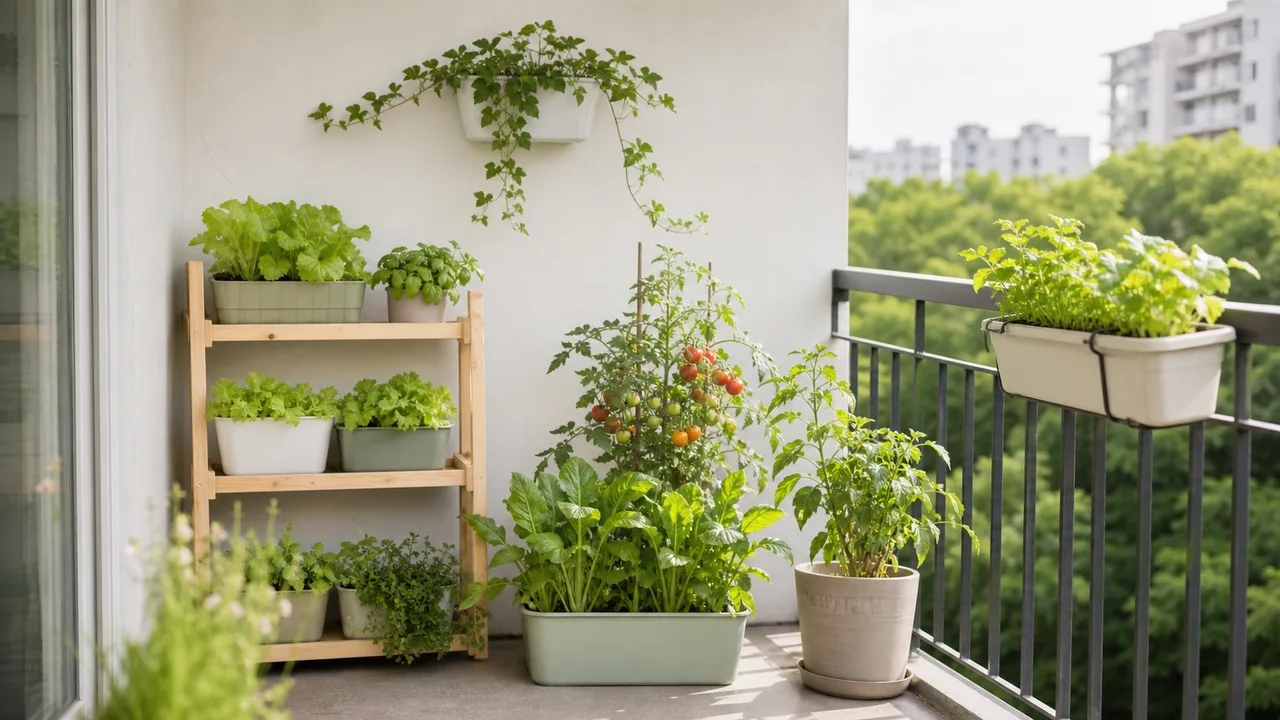
Before buying seeds or containers, spend two ordinary days finding out what your balcony can safely support. The useful outcome is not a label such as “south-facing.” It is a short profile: where direct sun falls, how wind and reflected heat behave, where water can drain, and how much floor area must remain clear.
Start with rules that plants cannot override
Confirm what your lease, building rules, or owners’ association permits. Check whether planters may hang from railings, whether runoff is allowed, and whether the balcony must keep a clear route to a door or fire escape.
Treat structural capacity as a building question, not a gardening estimate. Wet containers can be surprisingly heavy: University of Maryland Extension notes that a 20-inch container filled with moist medium and plants can weigh about 100 pounds. That example is a warning, not a load allowance. Ask the owner, building manager, or an appropriately qualified professional when capacity is uncertain. Do not attach planters to a railing unless the attachment and railing are approved for that use.
If permission, drainage, attachment, or load capacity cannot be confirmed, stop before choosing crops. A small freestanding herb pot may still be possible, but the unverified setup should not grow into a wall of containers.
Map direct sun instead of guessing from direction
Choose two representative days—ideally one clear day and one typical mixed-weather day. At one- or two-hour intervals, mark which parts of the balcony receive unobstructed direct sun. Record shade from the building above, neighboring towers, trees, screens, and the balcony’s own wall.
Use three practical zones:
- 6–8 hours of direct sun: the strongest candidate for warm-season fruiting crops such as compact tomatoes, peppers, cucumbers, or eggplants.
- 3–5 hours: a better starting point for lettuce, spinach, Asian greens, radishes, scallions, and some herbs.
- Less than 3 hours: treat this as a trial zone. A small pot of herbs or baby greens may be worth testing, but do not promise a productive vegetable garden from indirect light alone.
These ranges are planning guidance from University of Maryland Extension, not guarantees. Cultivar, season, temperature, latitude, and reflected light all change performance. Repeat the observation when the sun angle changes substantially; a bright spring corner may be shaded in summer, or the reverse.
Record heat and wind where the pots would sit
Stand in each proposed growing zone during the warmest part of the day. Glass, brick, concrete, and pale walls can reflect heat toward leaves and containers. A location that receives acceptable sunlight may still overheat roots or dry rapidly.
Then observe wind. Note whether leaves on nearby plants would be sheltered, moving gently, or repeatedly whipped. Wind increases water loss and can topple tall, narrow pots. If the only bright position is exposed, favor lower, wider containers and compact crops. Any wind screen must comply with building rules and must not turn into a sail.
Write the observation rather than converting it immediately into a purchase. “Bright from 11 a.m. to 5 p.m.; strong gusts near the outer rail; reflected heat after 3 p.m.” is more useful than “good balcony.”
Test the water route and drainage route
Identify the nearest water source and imagine carrying a full watering can between it and the plants. A plan that requires crossing carpet or moving furniture twice a day during hot weather is unlikely to remain convenient.
Every conventional container needs unobstructed drainage holes. Do not add gravel or broken pottery to the bottom in an attempt to improve drainage; University of Maryland Extension warns that this can raise the perched water level and worsen waterlogging. Use a quality container mix and functional holes instead.
Place an empty saucer or tray where the pot would sit, then test with a small amount of clean water. Check whether the surface slopes, whether water approaches a threshold, and whether runoff could reach a neighbor. A saucer protects the floor, but roots should not remain in collected water unless the container is a purpose-designed self-watering system with an overflow.
Measure usable space, not total floor area
Measure the rectangle that remains after preserving door swing, access, seating, utilities, and required egress. Then mark where a person must stand to water and harvest. That remaining footprint is the garden.
Record three dimensions for each possible position:
- floor width and depth;
- maximum plant height before it blocks a window, vent, or neighbor;
- clearance around doors and walking routes.
Begin with one or two containers that fit without being moved for ordinary balcony use. Expansion should follow a successful maintenance cycle, not precede it.
Turn the observations into a first-crop decision
Complete this profile:
| Check | Your observation | Decision |
|---|---|---|
| Permission and attachment | Approved / unresolved | |
| Load capacity | Confirmed / needs advice | |
| Brightest zone | Hours of direct sun | |
| Reflected heat | Low / moderate / strong | |
| Wind | Sheltered / breezy / exposed | |
| Water access | Easy / inconvenient | |
| Runoff control | Contained / unresolved | |
| Clear usable footprint | Width × depth |
Choose the first crop class from the limiting condition. A sunny but windy balcony may suit a low, wide container with a compact pepper better than a tall trellis. A balcony with four hours of sun may give a more reliable first result with loose-leaf lettuce than with a standard tomato. A bright balcony with unresolved load or runoff questions is not ready for a large container.
The check is complete when you can explain why one specific container belongs in one specific position—and what evidence would make you change that decision.
Sources
- University of Maryland Extension, “Growing Vegetables in Containers”: https://extension.umd.edu/resource/growing-vegetables-containers
- University of Maryland Extension, “Growing Vegetables in Containers and Salad Tables”: https://extension.umd.edu/resource/growing-vegetables-containers-and-salad-tables
This guide provides general educational information. Conditions, regulations, structures and plant requirements vary; verify decisions against your own site and relevant local guidance.