Common Balcony Gardening Mistakes: A Beginner Checklist
A useful checklist should tell you what to look at and what to do next. Run the first section before planting, the second during the first week, and the final section once a week. If several checks fail, correct drainage, light, pot size, a
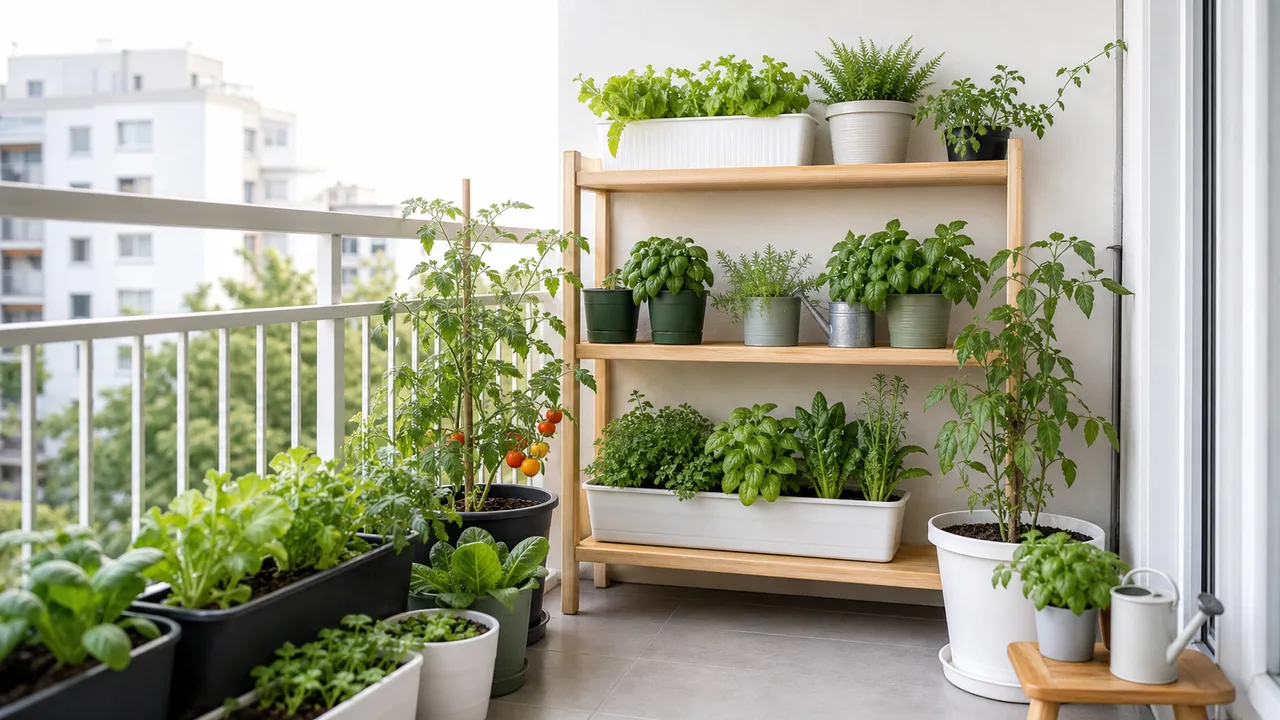
A useful checklist should tell you what to look at and what to do next. Run the first section before planting, the second during the first week, and the final section once a week. If several checks fail, correct drainage, light, pot size, and watering practice before reaching for fertilizer or pest control.
Before you add soil or plants
1. The balcony rules and load question are unresolved
Fail cue: You do not know whether planters may hang from the railing, where drainage may go, or whether the planned containers are acceptable for the structure.
Next action: Ask the owner, manager, or relevant building authority. A large container filled with wet mix and a mature plant can be far heavier than the empty pot. Do not use an online article to infer a safe load.
2. Water has nowhere to leave
Fail cue: An ordinary pot has no drainage opening, or it sits in collected water long after irrigation.
Next action: Choose a container made for drainage and protect the surface below with an appropriate tray. Empty retained water before the root zone remains waterlogged. A self-watering planter is different: it should have a functioning reservoir and overflow arrangement, used according to its design.
3. The container is filled with straight garden soil
Fail cue: The material becomes a dense, slow-draining mass in the pot.
Next action: Repot into a growing medium labeled for containers or potting use. Container media are designed to retain useful moisture while preserving air space; soil taken from a bed can compact in a pot.
4. Crop size, pot size, and sunlight do not match
Fail cue: A full-size tomato, cucumber, pepper, or eggplant is assigned a small decorative pot, or a warm-season fruiting crop receives only a short period of direct sun.
Next action: Check the cultivar label and a crop-specific container guide before planting. University of Maryland Extension uses 6–8 hours of direct sun as a planning range for warm-season crops and advises “bush” or “dwarf” varieties for small spaces. If your site is shadier, switch the crop rather than promising that extra fertilizer will replace light.
During the first week
5. Watering follows the clock instead of the container
Fail cue: You water every day regardless of weather and moisture, or you wait for severe wilt before checking.
Next action: Inspect the mix and plant, then water thoroughly when irrigation is actually needed. Apply enough to moisten the root zone and allow excess to drain. Frequency will change with heat, wind, container material, pot size, and plant growth; a fixed universal schedule is the mistake.
6. Water runs down the pot edge but the root ball stays dry
Fail cue: A very dry mix has shrunk from the sides, and poured water exits quickly without wetting the center.
Next action: Rewet slowly in repeated passes. For a manageable pot, Illinois Extension notes that bottom-soaking can help rehydrate severely dried mix; remove it once the surface becomes moist and allow it to drain. Do not leave it permanently submerged.
7. Seedlings were planted for instant fullness
Fail cue: Leaves overlap heavily, air cannot move through the plants, or several large crops share the root volume intended for one.
Next action: Thin or transplant according to crop and cultivar guidance. Crowding makes leaves compete for light and roots compete for water and nutrients; it also increases the risk of leaf infection where airflow is poor.
8. Support will be added “later”
Fail cue: A vine or top-heavy crop has begun to lean, but the planned stake or trellis is not installed.
Next action: Add suitable support while the plant is young, without driving it through a crowded root system or creating an unsafe sail in wind. Tomatoes, peppers, eggplants, cucumbers, and other tall or vining crops may benefit from support, but the attachment must comply with balcony rules.
The ten-minute weekly check
Use the same order so that one symptom does not trigger several unrelated treatments.
- Moisture: Is the root zone staying saturated, drying excessively, or behaving differently from last week? Adjust the next irrigation; do not automatically add more water.
- Drainage: Does water leave as intended, and is the tray emptied? Clear an obstruction or correct the setup.
- Spacing: Are leaves now packed together? Thin, prune only as appropriate for the crop, or move a container.
- Support: Are ties cutting into stems or stems rubbing against an edge? Loosen and reposition them.
- Leaves: Check both sides for spots, insects, webbing, chewing, or sticky residue. Photograph the pattern and identify it before treatment.
- New growth: Compare new leaves and stem extension with the previous week. One old yellow leaf is less informative than a continuing pattern.
- Feeding record: Note what product was used, when, and at what label rate. Do not stack products because growth seems slow.
A safe symptom-to-action order
The plant is wilting
Check the growing medium before watering. Wilt can occur when a container is dry, but roots in saturated media can also function poorly. If the mix is dry, water thoroughly and observe recovery. If it is wet and drainage is blocked or the pot stands in water, correct drainage and allow the root zone to regain air. Persistent wilt in correctly moist media needs crop-specific diagnosis.
Leaves are pale and growth is slow
First confirm that light, temperature, root space, and watering are plausible for the crop. Then check whether the potting mix already contains fertilizer and review the product label. Container crops do need replenished nutrients, but excess fertilizer can create soluble-salt injury and root stress. “Feed more” is not a diagnosis.
Flowers appear but fruit does not
Do not treat every fruiting crop alike or apply a generic bloom booster. Use a crop-specific diagnostic—such as the separate tomato fruit-set article—because the useful checks and their order depend on the crop.
Leaf damage is spreading
Separate the affected pot if practical, remove only badly damaged material with clean tools, and identify the pattern through a local Extension or horticultural service. Avoid applying a pesticide merely because an insect is present. Follow the complete product label and local rules. In the United States, EPA explains that pesticide directions define the permitted pest, application site, method, rate, timing, and restrictions; other countries have their own regulators and requirements.
Reset instead of escalating
Starting over can be the economical choice when the crop is fundamentally mismatched to the available sun, a large plant is trapped in an undersized pot, or the growing medium no longer drains. Record the failed check, change one foundation at a time, and choose a smaller or better-matched crop. The goal is not to rescue every plant with another purchase. It is to build a system whose light, roots, water, and care demands fit the balcony you actually have.
Sources
- University of Maryland Extension: Growing Vegetables in Containers and Salad Tables
- Penn State Extension: Container Vegetable Gardening—Four Keys to Success
- University of Illinois Extension: Watering
- University of Maryland Extension: Growing Vegetables in Containers
- US EPA: Introduction to Pesticide Labels
This guide provides general educational information. Conditions, regulations, structures and plant requirements vary; verify decisions against your own site and relevant local guidance.