Family Balcony Vegetable Corner Sample Plan
This is a hypothetical planning method, not a report about a real family or a promised harvest. Build the corner around three constraints: a clear shared path, containers approved for the space, and crops matched to measured light. Start wi
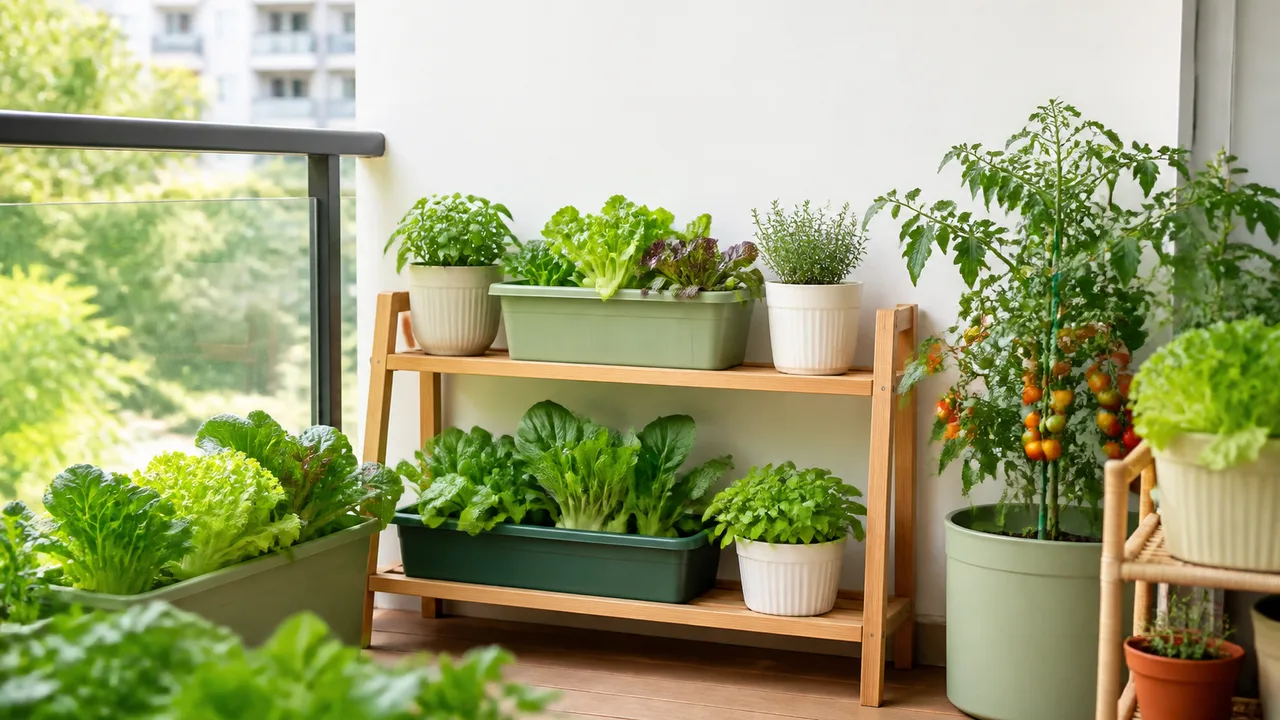
This is a hypothetical planning method, not a report about a real family or a promised harvest. Build the corner around three constraints: a clear shared path, containers approved for the space, and crops matched to measured light. Start with one adult-managed growing zone and add family tasks only after the setup drains safely and remains easy to supervise.
Map the living space before choosing crops
Draw the balcony door, walking route, drain, rail, walls, and places where water could reach another property. Record direct sunlight at several points during representative days; a compass direction alone does not establish usable light because walls, roofs, trees, and nearby buildings change exposure.
Mark three zones:
- No-container zone: doors, exits, required access, and any locally prohibited area.
- Adult-control zone: fertilizer, tools, large containers, supports, and tasks governed by product or building rules.
- Shared-care zone: reachable containers where an assigned task can be performed under appropriate supervision.
Do not infer structural capacity from proximity to a wall or railing. Confirm building, rental, and balcony-load requirements with the responsible local authority or property manager before placing a heavy system.
Choose a smallest viable crop set
University of Maryland Extension recommends substantial direct sun for most fruiting vegetables and gives a lower planning range for many leafy crops. Treat those ranges as screening guidance, not a yield guarantee. Match the final crop to its seed packet, cultivar description, local season, and the measured light map.
A restrained first plan can use:
- one container for a locally suitable leafy crop;
- one separate herb selected for household use and compatible light and moisture needs;
- one empty replacement slot rather than filling every surface.
Do not combine crops merely to make the corner look full. UMD notes that container size must accommodate mature roots and that crowding reduces light and air movement while increasing competition for water and nutrients.
Specify containers and runoff control
Each container needs functioning drainage and a medium intended for containers. Garden soil can compact in pots and reduce aeration. A saucer or permitted runoff solution must not leave the container standing in water; empty detachable saucers after watering where applicable.
Use crop-specific container guidance rather than calling every shallow box suitable. Supports must match the crop and be allowed by local rules. Do not attach anything to a railing, wall, or façade without explicit permission and an appropriate installation plan.
Assign observable family tasks
Assign tasks by action, not by vague ownership:
| Task | Observation or action | Boundary |
|---|---|---|
| Light record | Mark whether direct sun reaches the container | No climbing or leaning |
| Moisture record | Report how the medium feels below the surface | Adult decides whether to water |
| Harvest log | Record crop, date, and amount in a labeled unit | Follow crop and food-safety guidance |
| Cleanup | Return labels and permitted hand tools | Adult handles products and repairs |
Product mixing, fertilizer, pesticide decisions, drilling, attachment, lifting, and structural judgments remain adult or qualified-person tasks according to labels and local requirements.
Use a two-week observation card
The two-week period is for observing the system, not proving crop performance. Record light, moisture checks, drainage, access conflicts, and missed tasks. Do not interpret the absence of a harvest as failure; crop timing varies.
At the end, ask:
- Did the path stay clear?
- Did runoff remain controlled?
- Was the light record sufficient to keep or change the crop?
- Did the chosen task occur without repeated reminders or unsafe improvisation?
- Should the plan remove, replace, or add one container?
Expand only after these questions have acceptable local answers. A family vegetable corner succeeds as a plan when it creates a manageable decision process—not when an undocumented household is said to have produced a particular result.
Sources
This guide provides general educational information. Conditions, regulations, structures and plant requirements vary; verify decisions against your own site and relevant local guidance.