North-Facing Rental Balcony Leafy Greens Feasibility Guide
A north-facing label does not prove that leafy greens will grow well—or fail. Measure the actual light, screen the site against rental and runoff rules, then run a small crop trial. This guide produces a keep, adjust, or stop decision; it d
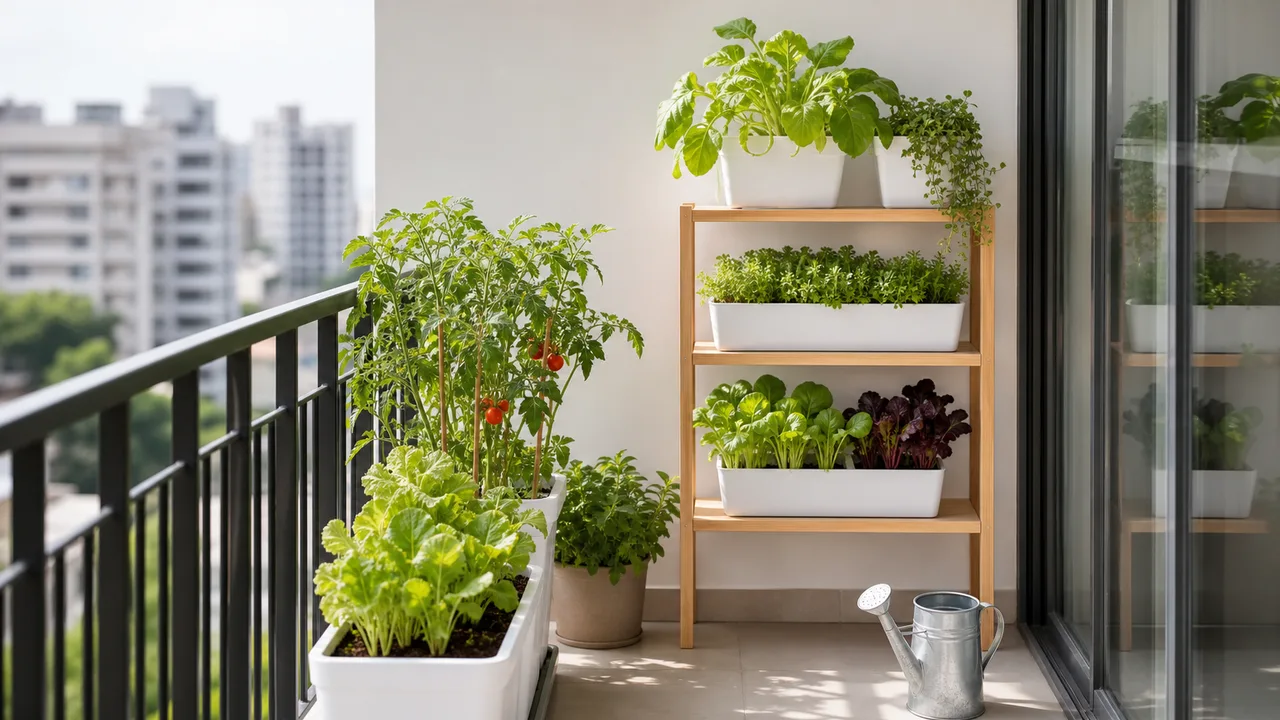
A north-facing label does not prove that leafy greens will grow well—or fail. Measure the actual light, screen the site against rental and runoff rules, then run a small crop trial. This guide produces a keep, adjust, or stop decision; it does not promise a harvest.
Replace compass direction with a light record
Nearby buildings, overhangs, trees, season, latitude, and reflective surfaces can make two north-facing balconies very different. On representative days, record when direct sun reaches the proposed container and whether the area remains bright but indirect, deeply shaded, or temporarily blocked.
Use this card:
| Date | Direct-sun start/end | Bright indirect period | Obstruction or weather | Proposed container position |
|---|---|---|---|---|
Do not convert one cloudy day into a permanent light rating. Repeat observations when season or nearby foliage changes materially.
Apply three feasibility gates
Gate 1: Permission and placement
Check the lease, property rules, permitted attachments, drainage, and required access. Do not drill, hang, or attach containers to the building or railing without permission and an appropriate installation method. Structural capacity is not established by this article.
Gate 2: Container function
Use a container that fits the mature crop, retains container medium, and drains freely. UMD warns that adding gravel does not improve container drainage. Keep openings unobstructed and manage saucers or runoff under applicable property rules.
Gate 3: Crop-light match
UMD uses roughly three to five hours of direct sun as a planning range for many cool-season leafy crops, while most fruiting crops need more. This is a screening range, not proof that every lettuce, spinach, kale, or Asian green will succeed. Check the cultivar, local temperature window, and packet instructions.
If the measured site falls below the crop guidance, choose a brighter permitted position, select a locally suitable alternative, or stop the outdoor trial. Do not recommend an electrical grow light unless the indoor location, product listing, moisture separation, outlet, landlord rules, and manufacturer instructions have been independently checked.
Run one small leafy-green trial
Choose one cultivar rather than a mixed collection. Record:
- seed or transplant source and cultivar;
- sowing or transplant date;
- packet spacing and maturity information;
- container dimensions and medium label;
- measured light at that position;
- moisture and drainage observations;
- leaf quality and any pest or disease symptoms;
- harvest date and labeled unit, if a harvest occurs.
Water from the condition of the medium, not a fixed weekday. UMD notes that wilt can occur when roots are too dry or too wet. Check below the surface and confirm drainage before treating wilt as a request for more water.
Decide: keep, adjust, or stop
Keep the position when the crop remains consistent with its guidance, the container functions, and the rental setup creates no access or runoff conflict.
Adjust one variable when the record points to a correctable placement, spacing, or watering issue. Changing several variables at once makes the trial harder to interpret.
Stop or replace the crop when the site cannot meet the cultivar’s light or seasonal needs, placement is not permitted, drainage cannot be controlled, or persistent decline needs local diagnosis.
The useful output is the completed record. “North-facing” becomes a measured constraint instead of a universal claim, and any future crop choice can be compared with the actual balcony rather than with an invented rental case.
Sources
This guide provides general educational information. Conditions, regulations, structures and plant requirements vary; verify decisions against your own site and relevant local guidance.