Spring Balcony Vegetable Planting List
Spring is not a date on a universal calendar. For a balcony grower, it is the transition from persistent cold toward reliably warmer conditions. The useful questions are local: Is frost still likely? Is the potting mix warming? Are young pl
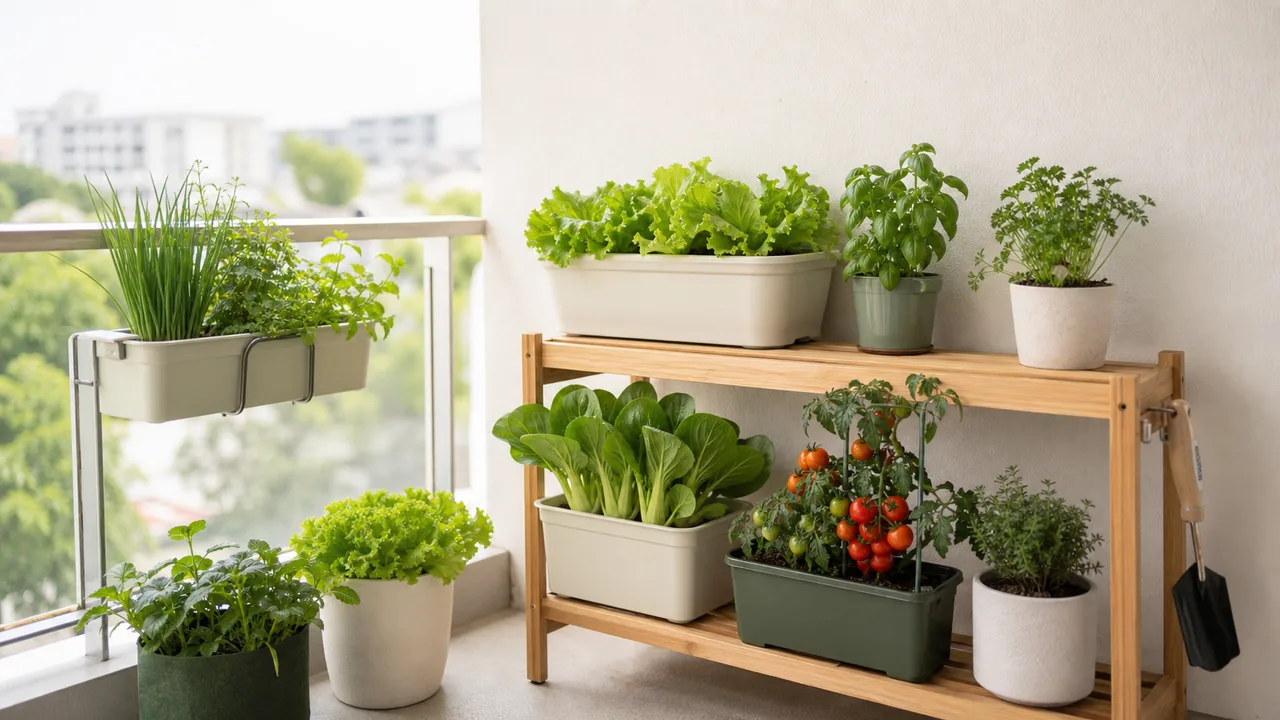
Spring is not a date on a universal calendar. For a balcony grower, it is the transition from persistent cold toward reliably warmer conditions. The useful questions are local: Is frost still likely? Is the potting mix warming? Are young plants hardened to outdoor light and wind? Answer those before choosing what to plant.
Pass four gates before planting
First, find your local average last-frost date from a nearby extension service or meteorological source. Treat it as a planning reference, not a guarantee. A cold night can arrive after the average.
Second, check conditions where the containers actually sit. A sheltered wall may be warmer than an exposed rail, while a shaded balcony can remain cool. Soil temperature and recent weather matter alongside air temperature.
Third, confirm usable light. Observe the balcony rather than relying only on its compass direction. Buildings, overhangs and the changing sun angle can shorten direct-light periods.
Fourth, prepare containers that drain freely. Use container potting mix rather than dense garden soil, and leave a practical route for watering without creating runoff below.
Wave one: crops for the cool part of spring
When the mix is workable and hard freezes are no longer routine, begin with crops commonly grown in cool conditions:
- leaf lettuce and other salad greens;
- spinach;
- radishes;
- peas, if you can provide a secure support;
- kale and other compact brassicas;
- parsley and cilantro.
“Cool-season” does not mean immune to every freeze. Seedlings, cultivars and exposed containers vary in tolerance. Keep frost cloth or another suitable temporary cover ready, and move portable pots to a protected position when a damaging cold event is forecast.
Sow a small amount first. A tray of greens and one or two deeper pots are easier to protect than a balcony filled in a single weekend. For repeat harvests, make modest follow-up sowings while conditions remain suitable instead of planting every seed at once.
Wave two: hardened transplants
Nursery plants raised in protected conditions need a gradual transition outdoors. Over several days, expose them to increasing outdoor light and wind, bringing them back to shelter if conditions are harsh. This hardening process reduces the shock of moving directly from a greenhouse or windowsill to an exposed balcony.
Cool-tolerant transplants such as lettuce, kale and some brassicas can join the first wave when local guidance permits. Avoid crowding: use the spacing on the seed packet or plant label, adjusted for the mature plant rather than the size of the seedling today.
Wave three: wait for warmth
Tomatoes, peppers, eggplants, cucumbers and basil belong to the warm-season group. Do not use one pleasant afternoon as the signal to set them out. Wait until local frost danger has passed and conditions have warmed consistently; follow crop-specific local guidance for outdoor planting.
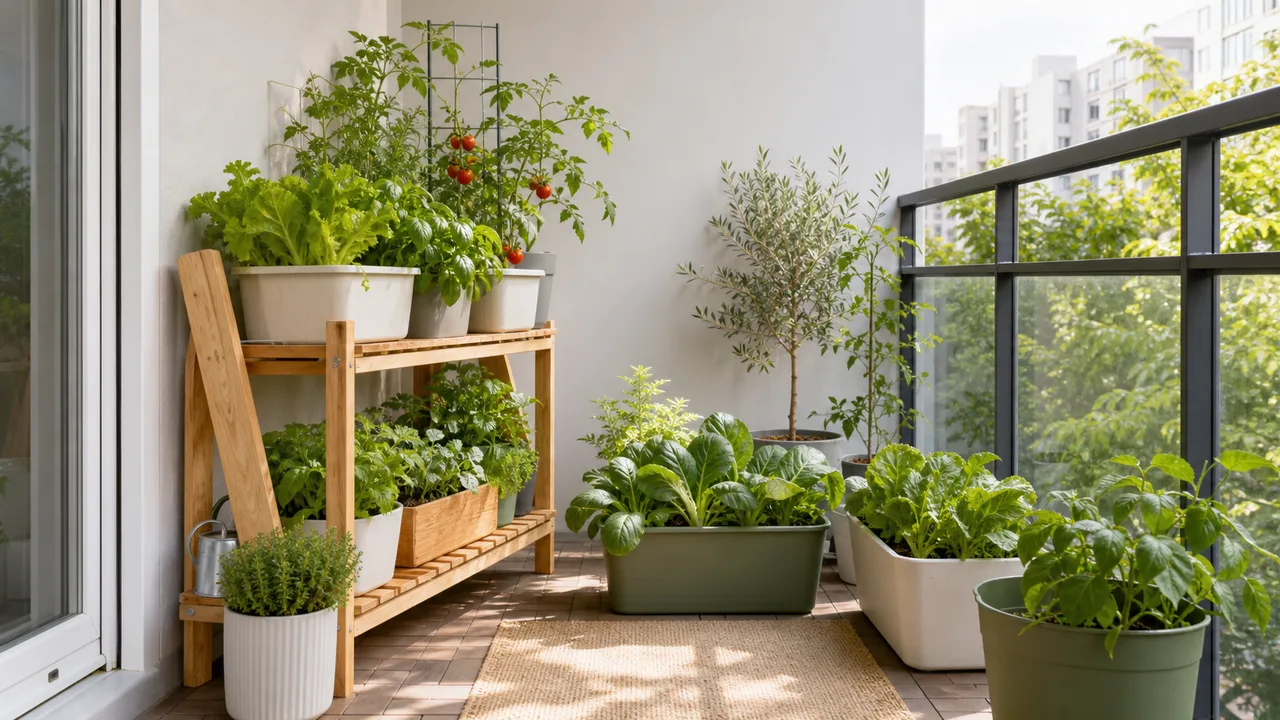
On a small balcony, choose only the warm crops that match the available sun and container space. A compact tomato still needs firm support and regular moisture. A cucumber needs a trellis that is stable, permitted and safe in wind. If those conditions are missing, greens or herbs are the better choice.
A simple spring sequence
Use this order rather than a fixed month-by-month chart:
- Cold still recurring: clean containers, obtain potting mix, map light and check drainage.
- Cool and workable: sow a small group of cool-season crops.
- Conditions moderating: harden and add appropriate transplants; continue small sowings.
- Frost risk passed and warmth established: introduce one or two suitable warm-season crops.
- Heat beginning: expect spinach, lettuce and cilantro to bolt or become bitter more quickly; harvest promptly, offer afternoon protection where appropriate, or replace them with heat-suited crops.
Weekly spring check
Test moisture below the surface rather than watering by weekday. Containers may stay wet during cool cloudy weather and dry quickly in sun or wind. Water thoroughly when needed, allow excess water to drain and do not leave roots standing in water.
Also check forecasts, new leaf growth, pests, supports and unused harvests. If one crop repeatedly wilts, bolts or goes uneaten, replace it instead of adding more containers. The best spring planting list is not the longest one; it is the smallest sequence that fits the balcony’s real conditions and the household’s meals.
Sources
- University of Maryland Extension, “When to Plant Vegetables”: https://extension.umd.edu/resource/when-plant-vegetables
- University of Minnesota Extension, “Planting the Vegetable Garden”: https://extension.umn.edu/planting-and-growing-guides/planting-vegetable-garden
- University of Minnesota Extension, “Growing Cool-Season Crops”: https://extension.umn.edu/planting-and-growing-guides/non-pest-issues-cool-season-crops
- University of Maryland Extension, “Growing Vegetables in Containers and Salad Tables”: https://extension.umd.edu/resource/growing-vegetables-containers-and-salad-tables
This guide provides general educational information. Conditions, regulations, structures and plant requirements vary; verify decisions against your own site and relevant local guidance.