Summer Balcony Vegetable Planting List
For this guide, summer means the locally hottest, highest-evaporation part of the growing season. A balcony can intensify those conditions through reflected heat, wind and small containers. Before planting more, decide whether each space an
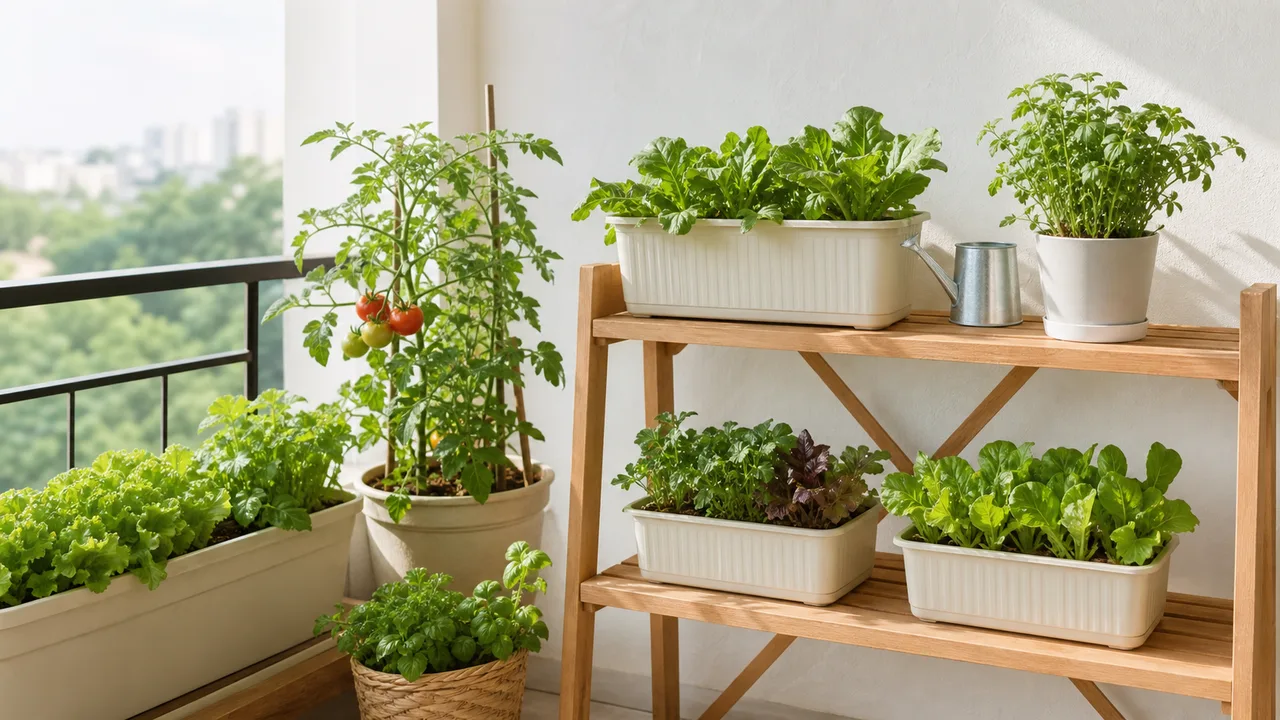
For this guide, summer means the locally hottest, highest-evaporation part of the growing season. A balcony can intensify those conditions through reflected heat, wind and small containers. Before planting more, decide whether each space and pot should continue, be replaced or wait.
Start with heat triage
Check the growing area during its hottest hours. Note direct sun, reflected heat from walls or glass, wind and how quickly the potting mix dries. Then sort existing pots into three groups:
- Continue: plants are growing, supported and recover normally after watering.
- Replace: a finished or persistently declining crop is using valuable space.
- Pause: the position is too hot or difficult to keep watered safely; wait for milder conditions or change the setup before adding a plant.
Do not interpret every midday droop as thirst. Feel the mix below the surface. If it is still moist and the plant recovers when the heat eases, adding more water may leave roots waterlogged.
What to plant in sustained warmth
Where the warm period is long enough and direct light is adequate, these crops may suit summer containers:
- compact tomatoes;
- compact peppers or eggplants;
- bush or supported climbing beans;
- cucumbers on a secure trellis;
- basil and other locally heat-suited herbs;
- chard, when local guidance and the cultivar support warm-season production.
This is a shortlist, not a promise. Check the seed packet or plant label for mature size, days to maturity and local planting advice. Fruiting crops generally need more root room, sun, support and consistent moisture than a tray of greens. Plant fewer than the balcony could physically hold so air can move and each pot remains reachable.
If the remaining warm period is short, buying a healthy transplant may be more realistic than starting a long-season crop from seed. If the crop cannot mature before conditions change, choose a quicker harvest or wait for the next suitable window.
What to stop sowing during peak heat
Lettuce, spinach, cilantro and several brassicas are commonly treated as cool-season crops. Heat can accelerate bolting and can reduce eating quality in some of them. During the hottest local period, repeated sowing in an exposed container may waste seed and water.
That does not mean these crops fail everywhere in summer. A cool coastal climate, a shaded morning-sun position or a heat-tolerant cultivar can change the result. Use local recommendations and a small trial rather than a universal rule. Otherwise, reserve the seed for the cooling side of the season.
Protect the root zone before adding shade
Water according to the plant and pot. Push a finger into the mix, use the container’s weight as a second cue and water thoroughly when the root zone needs it. Hot, dry and windy conditions can increase demand, but standing water and continuously saturated mix can also damage roots.
Mulch can slow surface water loss when the material and crop are suitable. Keep it from sealing wet mix against stems. Make sure every pot drains and empty standing water from saucers where required.
Shade cloth can reduce stress during the harshest exposure, but it must be securely installed and building rules must allow it. Begin with afternoon protection rather than making a sun-loving crop permanently dark. A wind screen also needs safe anchoring; on a balcony, loose fabric can become a hazard.
Replace crops with a purpose
After removing a finished plant, inspect the container. Remove diseased debris, confirm drainage and decide whether the mix or container remains suitable. Do not automatically place another large fruiting plant into an exhausted, undersized pot.
Choose the replacement by remaining conditions:
- Long warm runway: a locally recommended warm-season transplant.
- Short warm runway: a quick crop with a maturity period that fits.
- Cooling trend approaching: prepare for cool-season sowing instead of forcing another summer crop.
- Unmanageable heat or watering: leave the pot empty until the setup improves.
A five-minute summer check
In the morning, inspect moisture, wilting, pest damage, ties and forecast heat or wind. Harvest ripe produce so the plant is not carrying it unnecessarily. During an extreme event, prioritize keeping existing plants safe rather than expanding the garden.
At the end of each week, note which container dried first and why: smaller volume, more wind, more sun or a larger plant. That observation is more useful than adopting a blanket schedule. A successful summer list is a controlled set of crops the grower can water, support and harvest through the balcony’s hottest real conditions.
Sources
- University of Maryland Extension, “When to Plant Vegetables”: https://extension.umd.edu/resource/when-plant-vegetables
- University of Minnesota Extension, “Growing Cool-Season Crops”: https://extension.umn.edu/planting-and-growing-guides/non-pest-issues-cool-season-crops
- University of Maryland Extension, “Growing Vegetables in Containers and Salad Tables”: https://extension.umd.edu/resource/growing-vegetables-containers-and-salad-tables
- University of Minnesota Extension, “Fertilizing and Watering Container Plants”: https://extension.umn.edu/gardening-minnesota/fertilizing-and-watering-container-plants
This guide provides general educational information. Conditions, regulations, structures and plant requirements vary; verify decisions against your own site and relevant local guidance.