Winter Balcony Vegetable Planting List
Winter balcony advice must branch by climate. A balcony facing weeks of hard freezes is not the same growing environment as one with occasional light frost or a frost-free, mild rainy season. Identify your winter type before buying seed.
Winter balcony advice must branch by climate. A balcony facing weeks of hard freezes is not the same growing environment as one with occasional light frost or a frost-free, mild rainy season. Identify your winter type before buying seed.
Branch A: repeated hard freezes
Where containers freeze repeatedly or deeply, outdoor sowing may not be the sensible goal. Unless reliable local guidance identifies a suitable container crop and protection method, use winter for maintenance:
- remove dead or diseased crop debris;
- clean and store permitted supports and empty lightweight containers;
- keep drainage routes clear;
- inventory seed and check its storage instructions;
- map winter light for future planning;
- plan spring crops using the local last-frost reference.
Do not improvise a heater, open flame or heavy enclosure on a balcony. Any greenhouse, cover or attachment must comply with building and fire-safety rules and be secure in wind.
Branch B: intermittent frost
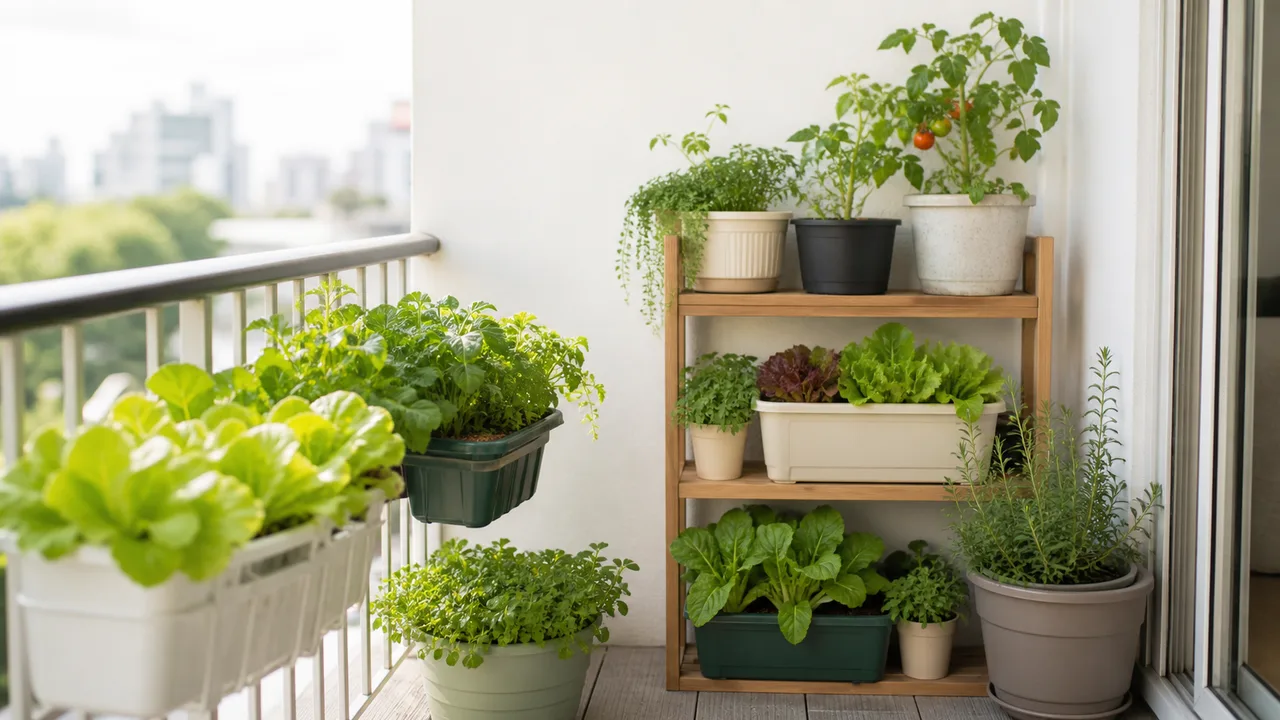
Where cold nights alternate with workable days, locally recommended cool-season crops may remain possible. Candidates can include spinach, kale, hardy salad greens, radishes, scallions and some brassicas, depending on cultivar and local conditions.
Select by stated cold tolerance and time to maturity, not by the word “winter” on a generic list. Start modestly. A portable container can sometimes be moved to a more protected permitted position, while a safely secured frost cover may help through a brief event. Neither guarantees survival in colder conditions than the crop can tolerate.
Check forecasts and the root zone instead of carrying a summer watering schedule into winter. Water only when the mix needs it, keep drainage functioning and avoid prolonged saturation.
Branch C: frost-free mild winter
In climates where winter brings milder growing temperatures rather than freezes, it can be the main season for cool-season vegetables. Consider locally recommended varieties of:
- lettuce and mixed salad greens;
- spinach;
- radishes;
- peas with safe support;
- kale and compact brassicas;
- parsley and cilantro.
Persistent heat can still delay this list, while short days and cloud can slow growth. Check local sowing advice, cultivar maturity and the balcony’s actual direct light. Sow small batches so one wet, warm or windy spell does not affect every plant.
Separate survival from useful growth
A plant can remain alive without producing much. Low light, cold roots and short days may slow development even when frost does not kill the crop. Decide what counts as success: a small leaf harvest, plants held for later growth, or active production.
If a crop survives but makes little usable growth, avoid adding fertilizer automatically. First check light, temperature, drainage and root condition. Fertilizer cannot correct a season that is too dark or cold for active growth.
Winter container checks
Inspect pots after strong wind, heavy rain, snow or a freeze-thaw event. Confirm that containers remain stable and drainage holes are open. Remove standing water where appropriate. Snow and ice can add weight and make surfaces slippery; do not move heavy pots in unsafe conditions.
Use protection only as directed by its manufacturer and locally relevant extension guidance. Keep it securely anchored, and vent or remove it when those instructions require.
A decision list, not a shopping list
Use the three branches in order:
- Identify the local winter pattern and balcony exposure.
- Check building, load, drainage and attachment limits.
- Select only crops recommended for that pattern and the available light.
- Define whether the goal is active harvest or simply holding plants.
- Keep the batch small enough to protect and inspect.
For many cold balconies, choosing not to plant outdoors is a sound winter decision. For a frost-free balcony, winter may be ideal for greens. The correct list comes from local conditions, not from the hemisphere or month alone.
Sources
- University of Maryland Extension, “When to Plant Vegetables”: https://extension.umd.edu/resource/when-plant-vegetables
- University of Minnesota Extension, “Planting the Vegetable Garden”: https://extension.umn.edu/planting-and-growing-guides/planting-vegetable-garden
- University of Minnesota Extension, “Growing Cool-Season Crops”: https://extension.umn.edu/planting-and-growing-guides/non-pest-issues-cool-season-crops
- University of Maryland Extension, “Growing Vegetables in Containers and Salad Tables”: https://extension.umd.edu/resource/growing-vegetables-containers-and-salad-tables
This guide provides general educational information. Conditions, regulations, structures and plant requirements vary; verify decisions against your own site and relevant local guidance.